About me

AAAAAAAAAAAAAAAAAAAAAAAAAAAAAAaaa

Tags

Why Should You Hire Me

Search This Blog

Featured Content Slider

Business

Recent Posts

Popular Posts

Facebook

Random Posts

Advertising

Search

AAAAAAAAAAAAAAAAAAAAAAAAAAAAAAAAA

Tuesday, February 13, 2018

Here’s How Top Universities Are Helping Students Cope with Unhappiness

‘Happiness’ courses are helping the students of today deal with psychological challenges in life.

A survey by the American College Health Association in 2009 reported that 47% of all students have anxiety and 84% are generally overwhelmed. The Yale College Council in 2013 reported that more than half of the undergraduates seek mental health services during their studies.

Chock full of academics and personal issues, student life at Yale is far from perfect.

More than a quarter of Yale’s undergraduates have signed up for a single course. What is this course, and why is it so popular? ‘Psychology and the Good Life’ is a twice-a-week class taught by psychology professor Laurie Santos, PhD.

The Happiness Course

Dr Santos is teaching undergraduates how to tackle psychological issues by changing their behavior and erasing cognitive bias. The course uses science-backed techniques to help prepare students for a better living.

Alannah Maynez, a freshman student, explains it perfectly:

"In reality, a lot of us are anxious, stressed, unhappy and numb. The fact that a class like this has such a large interest speaks to how tired students are of numbing their emotions — both positive and negative — so they can focus on their work, the next step, the next accomplishment."


Designed by FreePik


Behavioral Positivity

For this reason, Dr Santos does not check up on homework assignments. She instead sees to observe improvements in the behavior of students.

"Students want to change, to be happier themselves, and to change the culture here on campus. With one in four students at Yale taking it, if we see good habits, things like students showing more gratitude, procrastinating less, increasing social connections, we’re actually seeding change in the school’s culture."

But Yale is not the only institution with psychological wellness courses. One in every six students at Stanford are enrolled in ‘Designing Your Life’, a course for developing meaningful careers. These undergraduates are learning to prioritize happiness over wealth and fame.

At McGill’s University, a course called ‘Lessons of Community and Compassion’ is breeding well-being and contentment.

This indicates that a revolution is at hand. Students across institutions are learning the timeless value of inner peace. Peter Salovey, the president of Yale, calls it “a search for meaning”.

Inner Peace for You and I

Dr Santos is teaching students to lead more satisfying lives. But her teachings don’t merely apply to Ivy League students. She explains that the ability to become mentally drained under pressure is “a human problem”.

In the modern world, we are told that by building successful careers and earning big bucks, we will be able to find peace. Dr Santos dismisses the idea as false.

The drive for success should be based on meaningful connections with friends and family. It should be built on the desire for a career of passion rather than power. Inner peace comes from stability and building the strength to deal with difficult situations. This is the crux of what Laurie Santos hopes to teach the world, and it is something we all could use.

via Well And Good

Friday, February 2, 2018

Karachi Ranked Second Among World's Most Cannabis-Consuming Cities


Karachi, where marijuana is illegal, has been ranked as the second-largest consumer of cannabis, also known as marijuana or weed, among 120 cities, according to a study by Seedo, an Israel-based company that sells devices to grow marijuana at home.


The next-door neighbour, India’s New Delhi and Mumbai are placed among the top 10 cities of the world with the highest rate of marijuana’s consumption per year, confirmed by Seedo’s 2018 Cannabis Price Index.


It is known that such South Asian cities manage to sell the cheapest marijuana in the world, approximately priced from Rs.100 to Rs.500 for a gramme of lower quality.

Seedo concentrated the consumption and pricing of marijuana by focusing at the most and least weed-consuming countries around the globe.

From there, it analysed nations with the legal, illegal and partial factor in recent times to complete the final list of 120 cities.

Prices from cities are based on the crowd-sourced city-level surveys adjusted to the World Drug Report 207 of the United Nations Office on Drugs and Crime.

Conversations around legalising the consumption of cannabis for medicinal purposes have been gaining ground in India. In 2015, a member of parliament pushed to legalise marijuana, citing the benefits of consuming weed.

This article originally appeared on the QZ

Wednesday, November 22, 2017

Higher GPAs May Come From Hitting The Gym, Study Says

Using your college’s gym might boost both your GPA and the chances you’ll stick around until you graduate, according to a new Michigan State University study published in the current Recreational Sports Journal.

Led by James Pivarnik, professor of kinesiology and epidemiology at MSU, and MSU doctoral student Samantha Danbert, the 2010 study included 4,843 freshmen, 1,138 of whom purchased memberships to the school’s gym in their first semester. Not only were their cumulative GPAs 0.13 points higher than those who didn’t have memberships, but they also had a 3.5% higher retention rate and completed more credits through four semesters.

So are the results a credit to the benefits of working out, or does this say something about being involved in school?

Pivarnik thinks it’s both.

“There is clear evidence that physical activity can reduce stress and anxiety, which many students suffer throughout the semester. So that would be a direct benefit of working out,” he says. “But also, if working out in an organized setting with peers gives an increased sense of belonging to a group, in this case, the university, then that could also motivate one to perform better.”


Amy Ebbing, a December 2013 graduate of MSU who was part of the study as a gym member, says that working out could likely be a factor in having a higher GPA.

“I feel that students who have a gym membership and take time to work out typically have a more organized schedule, since having more activities requires good time management,” she says. “Having good time management is critical to being successful in the classroom, perhaps leading to a higher GPA.”

Ebbing also says that school involvement is very important and can increase the chances of college success.

She was an active member of a sorority and involved in the Human Energy Research Laboratory, which not only kept her busy and gave her social interaction, but also “made [her] happy and feel confident.”

“Being a part of these activities, going to the gym and attending class forced me to manage my time carefully, making sure I had ample time to work on coursework and study for exams,” she says.

While students are happy with higher GPAs, colleges are happy with higher retention rates. And according to this study, one way to keep students around might be to have them hitting the school’s gym.

“The 3.5% translated into over 400 students, so that is quite a bit of investment by all involved that will not finish at MSU,” says Pivarnik. “So the university would be very happy to increase retention rate by any amount.”

Promoting and increasing health around campuses is an ongoing movement, and one change several universities are making is that they’re becoming tobacco-free. There are about 431 colleges and universities across the country that are 100% tobacco-free, according to the American Lung Association.

Pivarnik says it’s extremely important for colleges to provide and promote a healthy campus.

“The MSU provost has the ‘healthy campus’ as one of her agenda items,” he says. “Obviously more to it than simply working out, but that is a piece of the puzzle.”

Courtesy: USA Today

Tuesday, September 26, 2017

Pakistani student develops stick to cure Parkinson’s

A Pakistani student at University of West England (UWE) has come up with a latest technology to cure patients suffering from Parkinson’s disease.

A stick, that can possibly prove to be a solution to the ailment, can benefit thousands of patients around the world.

During her study at the university, Neha Chaudhary invented this stick that is able to help 12,500 Parkinson’s patients in Britain alone. The stick induces movement in frozen muscles enabling the patients to walk again. In order to keep people’s attention away from the patients and their pain, the design of the stick has been kept simple and plain.


Having witnessed the disease from close, Neha invented this stick after her own family members suffered from the ailment repeatedly. Her father, in particular, sustained serious injuries due to the seizure of his muscles and his inability to walk.


Seeking pride in her achievement, Neha in an interview said that the success of this invention is her biggest accomplishment so far. Parkinson’s disease is one of the diseases that still do not have a proper treatment as yet and the medication only delays the effects of the disease temporarily. Neha also shared that she started this intervention as her university’s final year project, back in 2014.

The stick has been tested on a lot of people in England. National Health Services (NHS) and Parkinson’s organization in England has shown a keen interest in Neha’s incredible project.


Moreover, Neha even established her own company by the name of ‘Walk to Beat.’ According to Neha, when the patients were given the sticks they were overcome with immediate joy and majority of them expressed satisfaction that the stick does actually work.

Made of plastic, the light weighted, easy-to-carry-around stick makes use of high-tech sensors installed in it. The sensors, thus, activate dead muscles and help the patients to move around again.

Images & Post via: thenews.com.pk

Friday, August 4, 2017

Growing Cyber Harassment in Pakistan


It is estimated that there are over 37.5 million 3G, 4G/LTE subscribers in Pakistan at the moment. This dramatic rise in the use of internet technology has virtually reduced the world to  a Global Village. Though there are some challenges in this new virtual space and one such challenge is the striking rise in cyber crimes across Pakistan.

Cyber Harassment is one such form of cyber crimes which is getting more common in our society.  In this regard, psychologists of Global Medical Services Rawalpindi (Mr. Adil Ali & Ms. Ruhma Shahid) took the initiative and did an awareness program on PTV World on August 1st, 2017.


CYBER HARASSMENT

Cyber Harassment is the use of Information and Communications Technology to harass, control, manipulate or habitually disparage a child, adult, business or group without a direct or implied threat of physical harm.  It is commonly understood as behavior that disturbs or upsets, and it is characteristically repetitive.


There are many different types of harassment over the internet, some of which are given below:

Cyber Bullying:
This  include mean text messages or emails, rumors sent by email or posted on social networking sites, and embarrassing pictures, videos, websites, or fake profiles. Messages and images can be posted anonymously and distributed quickly to a very wide audience and can be difficult and sometimes impossible to trace the source or deleting inappropriate or harassing messages, texts, and pictures.

Cyber Stalking:
This includes the use of the Internet or other electronic means to stalk or harass an individual. It may include false accusations or attempts to defame the victim. It may also include monitoring, identity theft, threats, vandalism, solicitation for sex, or gathering information that may be used to threaten, embarrass or harass.

Spreading False Information about an Individual:
This includes sharing or posting false information about someone on social media that damages their reputation.

Hate speech:
This includes using abusive language, inappropriate comments based on religion, ethnicity or any other classification.

Leaking or publishing an individual’s personally identifiable information:
This includes publishing someone's identifiable information such name, date of birth, pictures or personal information such as medical conditions online.

Accessing and dissemination of private data without consent
This includes accessing someone's private information and sharing it online without their permission.

Hacking Electronic Devices / Accounts:
This includes hacking someone's electronic devices, email or social media accounts with intent to monitor their activities or to post something on their behalf without their knowledge.

PAKISTAN'S CYBER CRIME LAW
On 11/08/2016, National Assembly of Pakistan passed Cyber Crime Bill in Pakistan.  According to this new law, there are punishments for all kinds of cyber harassment:

Crimes
Punishments
Spreading False Information about an Individual
Up to 3 years in Prison or up to Rs. 1 Million in Fine or both
Making /  Spreading Explicit Images or Videos of an Individual
Up to 5 Years in Prison or up to Rs. 5 Million in Fine or both
Making / Spreading Explicit Images or Videos of Minor
Up to 7 Years in Prison or up to Rs. 5 Million in Fine or both
Cyber stalking
Up to 3 Years in Jail or Up to Rs. 1 Million in Fine or both
Cyber Stalking with a Minor
Up to 5 Years in Jail and up to Rs. 10 Million in Fine
Hacking Email / phone for Stalking
Up to 3 Years in Jail or Up to Rs. 1 Million in Fine or both 
Making Videos/Pics and Distributing without Consent
Up to 3 Years in Jail or Up to Rs. 1 Million in Fine or both
Hate speech
 Up to 7 Years in Prison or fine or both


Two days ago, on 02/08/2017, a man who blackmailed and harassed a girl through social networking website “Facebook” has been jailed for 14 months in prison along with a fine of fine of Rs 200,000.

WHAT MOTIVATES CYBER HARASSERS?
While discussing in a program World This Morning on PTV World (aired 1st Aug, 2017), Clinical Psychologist Mr. Adil Ali said that the freedom of privacy and personal anonymity that internet offers encourages many individuals to do things and say words that are generally not acceptable socially.  If there were no social norms, no rules, no regulations, no control, many of us would behave in the same way we do on the internet when we have the freedom of privacy.  Ms. Ruhma Shahid added that it is the persona that we wear that makes us civilized human beings.

HOW MAJORITY OF WOMEN REACT?
According to a study, 70% of Pakistani women afraid of posting their pictures online due to lack of safety. Cases of stolen Facebook profile pictures are routine and in some cases have forced women to completely stop using social media sites and they in fact get blamed from their families for doing it.

Not quite surprisingly, there is so much stigma around it that majority of women choose to stay quiet for the honor of their families and would refrain from seeking any kind of professional support.

CONSEQUENCES OF NOT GETTING HELP:
Not seeking help can effect the psychological well-being of victims.  According to Mr. Adil Ali, victims could develop different mental health issues including depression, anxiety and PTSD to name a few.

WHAT CAN VICTIMS DO:

Realize that its NOT your fault:
There should be no threat to family's honor if someone bullies you or harasses you online. You have the right to go online, create your profiles use all the social media websites.  Don't ever blame yourself.

Block the Harasser:
There are blocking options available to users on almost all websites and social media platforms.

Report to the platform:
Don't forget to share your bad experience with the platform you had it on.  For instance if you are on Facebook, report it to the Facebook authorities.

Seek Help from Local Authorities:
Report the incident to National Response Center for Cyber Crime by dialing the Cyber Rescue Help line at 9911.  Or call the recently launched Pakistan's first Cyber Harassment Hotline at 0800-39393.

Seek Psychological Help:
Its never easy to deal with such issues all alone.  Your family and social support network is going to be a huge help for you but its always good to see a psychologist, or counselor for help.  Psychologists or Counselors can help the victims in getting a psychologically safe environment to discuss their harassment and to take necessary steps for their safety.

CONTACT FOR SUPPORT:
If your are a victim of cyber harassment and need psychological support, feel free to contact Global Medical Services in Rawalpindi at (051) 4848934-36 or see any other psychologists in your area.

Tuesday, July 25, 2017

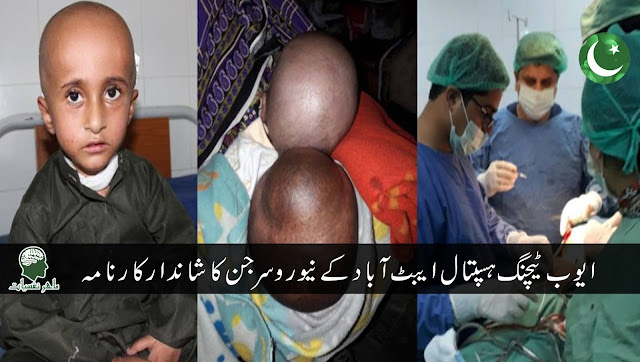
4-year-old Gets Life-Changing Neurosurgery at Ayub Teaching Hospital (Abbottabad)

A 4-year-old encephalocele patient gets life-changing surgery at Ayub Teaching Hospital, Abbottabad.

Asim from Mansehra, had a head-like substance attached to the back of the head measuring 5 kg, commonly called 2 heads, has been successfully operated at Neurosurgery Unit of Ayub Teaching Hospital Abbottabad.


Asim had a rare medical condition called encephalocele in which the brain matter oozes out from a gap in the skull into a sac-like structure, giving the person's head a grotesque appearance. These are some of the symptoms of a birth defect, encephalocele, that Asim was diagnosed with, explains Dr. Abdul Aziz, a Neurosurgeon and Associate Professor, who spearheaded the surgery operation together with a team of anesthetists and pediatricians that were responsible for his health before and after the surgery at Ayub Teaching Hospital.

Encephalocele, also known as cranium bifidum, is a neural tube defect. The neural tube, Dr. Abdul Aziz explains, characterized as a narrow channel that folds and closes during the third and fourth weeks of pregnancy to form the brain and spinal cord. He further defines the cord characterized by sac-like protrusions of the brain and the membranes that cover it through openings in the skull, which explains why the child was said to be having two heads.


Common symptoms also include, among many, buildup of too much fluid in the brain, delayed growth, and a small head.

Nonetheless, the surgical operation that involved removing the protruding part of the brain and the membranes, covering it back into the skull and closing the opening in the skull. It was one of a kind surgery in the history of Ayub Teaching Hospital. The kid recovered after five hours and was admitted to the unit. He is currently in a good and healthy condition and has been discharged from the hospital.

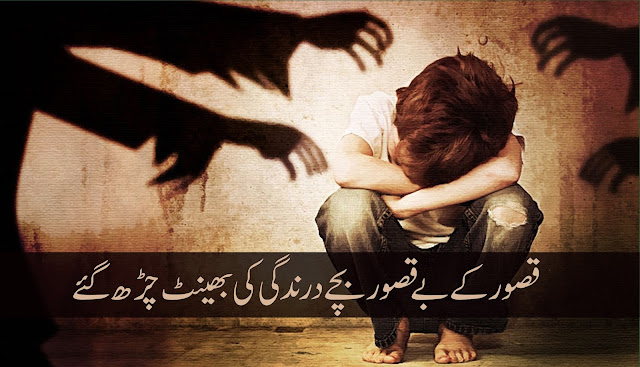
Sexual Abuse And Killing Of Minors On The Rise In Kasur


There have been an alarming raise in the number of cases of sexual abuse and murders of minors in the city of Kasur lately.

According to media reports, cases of rape and murder have seen a rise in Kasur and over the last six months, at least 10 children were sexually abused and murdered in the city.

Residents of Kasur organised a rally to protest the failure of concerned authorities to crack down on criminals involved in raping and then murdering minor girls.

Most of these unfortunate incidents took place in the areas of Ali Park, Gulberg Colony, Perowala Road,

The rally started from Railway Station Chowk and stopped at Adda Lilyani where the participants raised their voice against the heinous crimes.


Although police claimed of making some arrests in the cases, the protesters said they wanted to be informed who the accused were. The protesters chanted slogans against the police and demanded they be heard.

The Senate on Friday passed a bill which for the first time makes sexual assault against minors, child pornography and trafficking a punishable act.

The Senate passed a bill in 2016, making sexual assault against minors, child pornography and trafficking a punishable act, but the incidents continue to take place unabashedly.

A child sexual abuse scandal in Husain Khanwala village of Kasur continues to haunt the locals, with this latest wave of yet other such incidents adding to the pain of the sufferers.

Around two years ago, local gangs abused and filmed hundreds of children in the village. They were said to be an organised gang of criminals who would also sell the videos later.

CM Punjab takes notice

Chief Minister Punjab Shehbaz Sharif took notice of the new report and ordered provision of relief to the victims. The chief minister has also sought a report from DPO Sheikhupura and DPO Kasur.

Meanwhile, DPO Kasur has claimed that most of those involved in the heinous crime of rape and murder are in custody and many have been killed in encounters.

Courtesy: Geo / 92 News

Tuesday, June 13, 2017

'ICE' Addiction Grows At Alarming Level Among Youth

PESHAWAR: Rise in the use of ice or methamphetamine as party drug in Peshawar is alarming and more terrifying is the fact that families have no clue until the worst side effects start to show.

Recently few gaming zones in a posh locality of Peshawar were raided by the district administration and police and found school boys using banned Sheesha and Oxygen however, some locals suspected sale of ice too.

A youth, who is working at a restaurant using ice in the same locality, did not disclose where from he was buying the drug but shared his feelings after he used the drug.

“When I take a dose it keeps me alert and awake for hours. I don’t sleep. I don’t know what I am doing after that,” he said on condition of anonymity. Despite his low income, he was somehow managing to buy the drug.

Use of methamphetamine as party drug in Peshawar is alarmingly high

“Ice, a potent stimulant drug, also referred to as crystal or crystal meth since it comes as a powder or crystals is being used by men and women of different ages and backgrounds,” said Dr Mian Iftikhar Hussain, a known psychiatrist, who runs a detoxification and rehabilitation hospital in Peshawar.

His is one of the very few health facilities that treat such patients. Treatment is itself a long and painful process expanding over months and needing huge financial resources and Job’s patience from the family and doctors handling such addicts.


“The drug is also being used by the professional women dancers for it keeps them awake for long hours,” said Dr Hussain while keeping the identity of the patients he was treating secret for the obvious reasons.

In the 1980s and 90s, provincial capital of Khyber Pakhtunkhwa and adjoining tribal area was a hippie trail due to easy availability of fine quality hashish (charas), then later in 90s heroin addicts could be seen under the underpasses, green belts teaching a lesson to the passersby about terrifying consequences of the use of the illicit drug.

However, now the use of methamphetamines (crystal meth) is relatively new but gaining popularity fast among men, women and youth.

“It can keep you alert and active for hours that’s why dependency on the drug leads to paranoia, hallucinations and behavioural issues. Long-term use can lead to psychosis and violent behaviour,” said Dr Hussain. He mentioned a case wherein a successful businessman after excessive use of ice got so uncontrollably violent that he killed his wife.

“Usually parents or the family don’t notice any change at first in the drug user. It is the violent behaviour that attracts attention,” he said. He added that the entire family needed to care for such patients.

“They need to be under close watch for at least six months once they get out of rehab. They should not have a cellular phone and should not be allowed alone out of home,” said Dr Hussain, explaining what family needed to do even after the ice-addict rehabilitated at a health facility.

While young and grown men and women are at risk of ice, police blame the weak narcotic’s law for failure to curb the drug peddlers but the senior lawyers say the police are at fault as Control of Narcotic Substance Act, 1997 could control the drug smuggling and abuse.

Ice, which is available for Rs4,000 to Rs6,000 per gram, is expensive and addict develops dependency so with each increased use of the drug the condition of addict and dependency on the drugs worsen.

It is the little expensive amount of the deadly drug that is the very reason it is easy to peddle and hide as well as difficult for the law enforcers to frame or charge the arrested peddlers under the relevant narcotic law.

“During many raids in the city we recovered ice from the drug smugglers but they got away with crime as the amount of ice in grams worth a lot of money was not punishable under the law. They were just fined and released,” said a police official on condition of anonymity.

However, Noor Alam, a senior lawyer, contested it and said that under 9(C) of CNSA, 1997 smugglers selling ice which, a psychotropic drug, were charged. In some cases smugglers accused and charged with smuggling some 500 grams to a little more than a kilogram were sentenced to 14 years imprisonment under the CNSA 1997.

“The problem is that police think of alcohol and charas as drugs but are not much aware of the more serious ice drug,” said Mr Alam. He said that due to alertness and euphoric feelings, the ice users felt after taking it, it had become popular with students during preparation for examinations.

This Article was originally published in Dawn

Interested for our works and services?
Get more of our update !