About me

AAAAAAAAAAAAAAAAAAAAAAAAAAAAAAaaa

Tags

Why Should You Hire Me

Search This Blog

Featured Content Slider

Business

Recent Posts

Popular Posts

Facebook

Random Posts

Advertising

Search

AAAAAAAAAAAAAAAAAAAAAAAAAAAAAAAAA
Showing posts with label Pakistan. Show all posts

Friday, October 12, 2018

346 people committed suicide in Malakand in last eight months

MALAKAND: In the last eight months, 346 people have committed suicide over in seven districts of Malakand division.

According to police sources, majority of the reported suicides cases were women.

Swat had the highest number of suicides with 222 cases being reported in the last eight months. While 73 people committed suicide in Buner, 26 in Shangla, 15 in Lower Dir and nine in Chitral, police sources said.


Further, the police sources said that one case was reported in Upper Dir, while 33 people were reported to have committed suicide in the Mitta district.

Police said domestic issues and unemployment were mainly the reasons behind the suicides.

Last month, the KP government had sprung into action after an increase in the number of suicide cases in Chitral.

The provincial government had decided to form a committee to investigate the matter.

Chitral district nazim Maghfirat Shah said, during the last six months, more than 12 people reportedly committed suicide, out of which 70 per cent were women.

A study from 2016 published in Khyber Medical University Journal states, that women had almost double the rate of suicide than men in Chitral. As per the findings, the cause was family and marital issues while the methods used included drowning and hanging.

The study further stated that the suicide rate among married women was high. According to the findings, women committed suicide because of their unhappy marriages – their unstable relationship with their spouses making it difficult for them to manage personal and household responsibilities.

The disharmony in marriage continued as the girls’ parents seldom supported them, neither was there any option for divorce, which left suicide as the only way out, according to the study.

Source: GEO News

Friday, February 2, 2018

Karachi Ranked Second Among World's Most Cannabis-Consuming Cities


Karachi, where marijuana is illegal, has been ranked as the second-largest consumer of cannabis, also known as marijuana or weed, among 120 cities, according to a study by Seedo, an Israel-based company that sells devices to grow marijuana at home.


The next-door neighbour, India’s New Delhi and Mumbai are placed among the top 10 cities of the world with the highest rate of marijuana’s consumption per year, confirmed by Seedo’s 2018 Cannabis Price Index.


It is known that such South Asian cities manage to sell the cheapest marijuana in the world, approximately priced from Rs.100 to Rs.500 for a gramme of lower quality.

Seedo concentrated the consumption and pricing of marijuana by focusing at the most and least weed-consuming countries around the globe.

From there, it analysed nations with the legal, illegal and partial factor in recent times to complete the final list of 120 cities.

Prices from cities are based on the crowd-sourced city-level surveys adjusted to the World Drug Report 207 of the United Nations Office on Drugs and Crime.

Conversations around legalising the consumption of cannabis for medicinal purposes have been gaining ground in India. In 2015, a member of parliament pushed to legalise marijuana, citing the benefits of consuming weed.

This article originally appeared on the QZ

Tuesday, September 26, 2017

Pakistani student develops stick to cure Parkinson’s

A Pakistani student at University of West England (UWE) has come up with a latest technology to cure patients suffering from Parkinson’s disease.

A stick, that can possibly prove to be a solution to the ailment, can benefit thousands of patients around the world.

During her study at the university, Neha Chaudhary invented this stick that is able to help 12,500 Parkinson’s patients in Britain alone. The stick induces movement in frozen muscles enabling the patients to walk again. In order to keep people’s attention away from the patients and their pain, the design of the stick has been kept simple and plain.


Having witnessed the disease from close, Neha invented this stick after her own family members suffered from the ailment repeatedly. Her father, in particular, sustained serious injuries due to the seizure of his muscles and his inability to walk.


Seeking pride in her achievement, Neha in an interview said that the success of this invention is her biggest accomplishment so far. Parkinson’s disease is one of the diseases that still do not have a proper treatment as yet and the medication only delays the effects of the disease temporarily. Neha also shared that she started this intervention as her university’s final year project, back in 2014.

The stick has been tested on a lot of people in England. National Health Services (NHS) and Parkinson’s organization in England has shown a keen interest in Neha’s incredible project.


Moreover, Neha even established her own company by the name of ‘Walk to Beat.’ According to Neha, when the patients were given the sticks they were overcome with immediate joy and majority of them expressed satisfaction that the stick does actually work.

Made of plastic, the light weighted, easy-to-carry-around stick makes use of high-tech sensors installed in it. The sensors, thus, activate dead muscles and help the patients to move around again.

Images & Post via: thenews.com.pk

Friday, August 4, 2017

Growing Cyber Harassment in Pakistan


It is estimated that there are over 37.5 million 3G, 4G/LTE subscribers in Pakistan at the moment. This dramatic rise in the use of internet technology has virtually reduced the world to  a Global Village. Though there are some challenges in this new virtual space and one such challenge is the striking rise in cyber crimes across Pakistan.

Cyber Harassment is one such form of cyber crimes which is getting more common in our society.  In this regard, psychologists of Global Medical Services Rawalpindi (Mr. Adil Ali & Ms. Ruhma Shahid) took the initiative and did an awareness program on PTV World on August 1st, 2017.


CYBER HARASSMENT

Cyber Harassment is the use of Information and Communications Technology to harass, control, manipulate or habitually disparage a child, adult, business or group without a direct or implied threat of physical harm.  It is commonly understood as behavior that disturbs or upsets, and it is characteristically repetitive.


There are many different types of harassment over the internet, some of which are given below:

Cyber Bullying:
This  include mean text messages or emails, rumors sent by email or posted on social networking sites, and embarrassing pictures, videos, websites, or fake profiles. Messages and images can be posted anonymously and distributed quickly to a very wide audience and can be difficult and sometimes impossible to trace the source or deleting inappropriate or harassing messages, texts, and pictures.

Cyber Stalking:
This includes the use of the Internet or other electronic means to stalk or harass an individual. It may include false accusations or attempts to defame the victim. It may also include monitoring, identity theft, threats, vandalism, solicitation for sex, or gathering information that may be used to threaten, embarrass or harass.

Spreading False Information about an Individual:
This includes sharing or posting false information about someone on social media that damages their reputation.

Hate speech:
This includes using abusive language, inappropriate comments based on religion, ethnicity or any other classification.

Leaking or publishing an individual’s personally identifiable information:
This includes publishing someone's identifiable information such name, date of birth, pictures or personal information such as medical conditions online.

Accessing and dissemination of private data without consent
This includes accessing someone's private information and sharing it online without their permission.

Hacking Electronic Devices / Accounts:
This includes hacking someone's electronic devices, email or social media accounts with intent to monitor their activities or to post something on their behalf without their knowledge.

PAKISTAN'S CYBER CRIME LAW
On 11/08/2016, National Assembly of Pakistan passed Cyber Crime Bill in Pakistan.  According to this new law, there are punishments for all kinds of cyber harassment:

Crimes
Punishments
Spreading False Information about an Individual
Up to 3 years in Prison or up to Rs. 1 Million in Fine or both
Making /  Spreading Explicit Images or Videos of an Individual
Up to 5 Years in Prison or up to Rs. 5 Million in Fine or both
Making / Spreading Explicit Images or Videos of Minor
Up to 7 Years in Prison or up to Rs. 5 Million in Fine or both
Cyber stalking
Up to 3 Years in Jail or Up to Rs. 1 Million in Fine or both
Cyber Stalking with a Minor
Up to 5 Years in Jail and up to Rs. 10 Million in Fine
Hacking Email / phone for Stalking
Up to 3 Years in Jail or Up to Rs. 1 Million in Fine or both 
Making Videos/Pics and Distributing without Consent
Up to 3 Years in Jail or Up to Rs. 1 Million in Fine or both
Hate speech
 Up to 7 Years in Prison or fine or both


Two days ago, on 02/08/2017, a man who blackmailed and harassed a girl through social networking website “Facebook” has been jailed for 14 months in prison along with a fine of fine of Rs 200,000.

WHAT MOTIVATES CYBER HARASSERS?
While discussing in a program World This Morning on PTV World (aired 1st Aug, 2017), Clinical Psychologist Mr. Adil Ali said that the freedom of privacy and personal anonymity that internet offers encourages many individuals to do things and say words that are generally not acceptable socially.  If there were no social norms, no rules, no regulations, no control, many of us would behave in the same way we do on the internet when we have the freedom of privacy.  Ms. Ruhma Shahid added that it is the persona that we wear that makes us civilized human beings.

HOW MAJORITY OF WOMEN REACT?
According to a study, 70% of Pakistani women afraid of posting their pictures online due to lack of safety. Cases of stolen Facebook profile pictures are routine and in some cases have forced women to completely stop using social media sites and they in fact get blamed from their families for doing it.

Not quite surprisingly, there is so much stigma around it that majority of women choose to stay quiet for the honor of their families and would refrain from seeking any kind of professional support.

CONSEQUENCES OF NOT GETTING HELP:
Not seeking help can effect the psychological well-being of victims.  According to Mr. Adil Ali, victims could develop different mental health issues including depression, anxiety and PTSD to name a few.

WHAT CAN VICTIMS DO:

Realize that its NOT your fault:
There should be no threat to family's honor if someone bullies you or harasses you online. You have the right to go online, create your profiles use all the social media websites.  Don't ever blame yourself.

Block the Harasser:
There are blocking options available to users on almost all websites and social media platforms.

Report to the platform:
Don't forget to share your bad experience with the platform you had it on.  For instance if you are on Facebook, report it to the Facebook authorities.

Seek Help from Local Authorities:
Report the incident to National Response Center for Cyber Crime by dialing the Cyber Rescue Help line at 9911.  Or call the recently launched Pakistan's first Cyber Harassment Hotline at 0800-39393.

Seek Psychological Help:
Its never easy to deal with such issues all alone.  Your family and social support network is going to be a huge help for you but its always good to see a psychologist, or counselor for help.  Psychologists or Counselors can help the victims in getting a psychologically safe environment to discuss their harassment and to take necessary steps for their safety.

CONTACT FOR SUPPORT:
If your are a victim of cyber harassment and need psychological support, feel free to contact Global Medical Services in Rawalpindi at (051) 4848934-36 or see any other psychologists in your area.

Tuesday, July 25, 2017

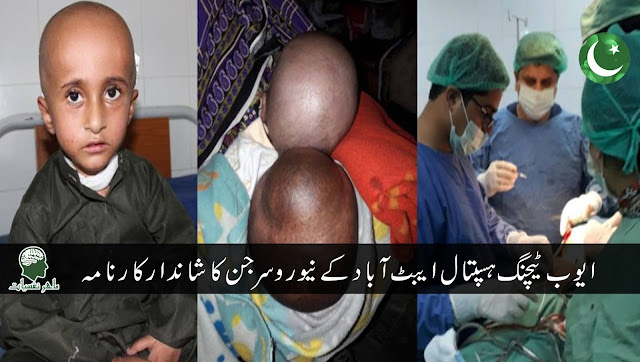
4-year-old Gets Life-Changing Neurosurgery at Ayub Teaching Hospital (Abbottabad)

A 4-year-old encephalocele patient gets life-changing surgery at Ayub Teaching Hospital, Abbottabad.

Asim from Mansehra, had a head-like substance attached to the back of the head measuring 5 kg, commonly called 2 heads, has been successfully operated at Neurosurgery Unit of Ayub Teaching Hospital Abbottabad.


Asim had a rare medical condition called encephalocele in which the brain matter oozes out from a gap in the skull into a sac-like structure, giving the person's head a grotesque appearance. These are some of the symptoms of a birth defect, encephalocele, that Asim was diagnosed with, explains Dr. Abdul Aziz, a Neurosurgeon and Associate Professor, who spearheaded the surgery operation together with a team of anesthetists and pediatricians that were responsible for his health before and after the surgery at Ayub Teaching Hospital.

Encephalocele, also known as cranium bifidum, is a neural tube defect. The neural tube, Dr. Abdul Aziz explains, characterized as a narrow channel that folds and closes during the third and fourth weeks of pregnancy to form the brain and spinal cord. He further defines the cord characterized by sac-like protrusions of the brain and the membranes that cover it through openings in the skull, which explains why the child was said to be having two heads.


Common symptoms also include, among many, buildup of too much fluid in the brain, delayed growth, and a small head.

Nonetheless, the surgical operation that involved removing the protruding part of the brain and the membranes, covering it back into the skull and closing the opening in the skull. It was one of a kind surgery in the history of Ayub Teaching Hospital. The kid recovered after five hours and was admitted to the unit. He is currently in a good and healthy condition and has been discharged from the hospital.

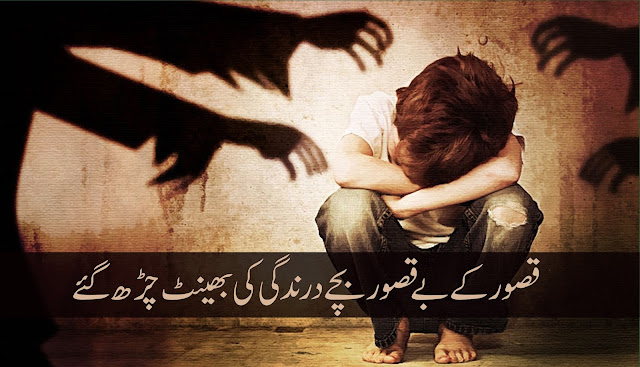
Sexual Abuse And Killing Of Minors On The Rise In Kasur


There have been an alarming raise in the number of cases of sexual abuse and murders of minors in the city of Kasur lately.

According to media reports, cases of rape and murder have seen a rise in Kasur and over the last six months, at least 10 children were sexually abused and murdered in the city.

Residents of Kasur organised a rally to protest the failure of concerned authorities to crack down on criminals involved in raping and then murdering minor girls.

Most of these unfortunate incidents took place in the areas of Ali Park, Gulberg Colony, Perowala Road,

The rally started from Railway Station Chowk and stopped at Adda Lilyani where the participants raised their voice against the heinous crimes.


Although police claimed of making some arrests in the cases, the protesters said they wanted to be informed who the accused were. The protesters chanted slogans against the police and demanded they be heard.

The Senate on Friday passed a bill which for the first time makes sexual assault against minors, child pornography and trafficking a punishable act.

The Senate passed a bill in 2016, making sexual assault against minors, child pornography and trafficking a punishable act, but the incidents continue to take place unabashedly.

A child sexual abuse scandal in Husain Khanwala village of Kasur continues to haunt the locals, with this latest wave of yet other such incidents adding to the pain of the sufferers.

Around two years ago, local gangs abused and filmed hundreds of children in the village. They were said to be an organised gang of criminals who would also sell the videos later.

CM Punjab takes notice

Chief Minister Punjab Shehbaz Sharif took notice of the new report and ordered provision of relief to the victims. The chief minister has also sought a report from DPO Sheikhupura and DPO Kasur.

Meanwhile, DPO Kasur has claimed that most of those involved in the heinous crime of rape and murder are in custody and many have been killed in encounters.

Courtesy: Geo / 92 News

Tuesday, June 13, 2017

'ICE' Addiction Grows At Alarming Level Among Youth

PESHAWAR: Rise in the use of ice or methamphetamine as party drug in Peshawar is alarming and more terrifying is the fact that families have no clue until the worst side effects start to show.

Recently few gaming zones in a posh locality of Peshawar were raided by the district administration and police and found school boys using banned Sheesha and Oxygen however, some locals suspected sale of ice too.

A youth, who is working at a restaurant using ice in the same locality, did not disclose where from he was buying the drug but shared his feelings after he used the drug.

“When I take a dose it keeps me alert and awake for hours. I don’t sleep. I don’t know what I am doing after that,” he said on condition of anonymity. Despite his low income, he was somehow managing to buy the drug.

Use of methamphetamine as party drug in Peshawar is alarmingly high

“Ice, a potent stimulant drug, also referred to as crystal or crystal meth since it comes as a powder or crystals is being used by men and women of different ages and backgrounds,” said Dr Mian Iftikhar Hussain, a known psychiatrist, who runs a detoxification and rehabilitation hospital in Peshawar.

His is one of the very few health facilities that treat such patients. Treatment is itself a long and painful process expanding over months and needing huge financial resources and Job’s patience from the family and doctors handling such addicts.


“The drug is also being used by the professional women dancers for it keeps them awake for long hours,” said Dr Hussain while keeping the identity of the patients he was treating secret for the obvious reasons.

In the 1980s and 90s, provincial capital of Khyber Pakhtunkhwa and adjoining tribal area was a hippie trail due to easy availability of fine quality hashish (charas), then later in 90s heroin addicts could be seen under the underpasses, green belts teaching a lesson to the passersby about terrifying consequences of the use of the illicit drug.

However, now the use of methamphetamines (crystal meth) is relatively new but gaining popularity fast among men, women and youth.

“It can keep you alert and active for hours that’s why dependency on the drug leads to paranoia, hallucinations and behavioural issues. Long-term use can lead to psychosis and violent behaviour,” said Dr Hussain. He mentioned a case wherein a successful businessman after excessive use of ice got so uncontrollably violent that he killed his wife.

“Usually parents or the family don’t notice any change at first in the drug user. It is the violent behaviour that attracts attention,” he said. He added that the entire family needed to care for such patients.

“They need to be under close watch for at least six months once they get out of rehab. They should not have a cellular phone and should not be allowed alone out of home,” said Dr Hussain, explaining what family needed to do even after the ice-addict rehabilitated at a health facility.

While young and grown men and women are at risk of ice, police blame the weak narcotic’s law for failure to curb the drug peddlers but the senior lawyers say the police are at fault as Control of Narcotic Substance Act, 1997 could control the drug smuggling and abuse.

Ice, which is available for Rs4,000 to Rs6,000 per gram, is expensive and addict develops dependency so with each increased use of the drug the condition of addict and dependency on the drugs worsen.

It is the little expensive amount of the deadly drug that is the very reason it is easy to peddle and hide as well as difficult for the law enforcers to frame or charge the arrested peddlers under the relevant narcotic law.

“During many raids in the city we recovered ice from the drug smugglers but they got away with crime as the amount of ice in grams worth a lot of money was not punishable under the law. They were just fined and released,” said a police official on condition of anonymity.

However, Noor Alam, a senior lawyer, contested it and said that under 9(C) of CNSA, 1997 smugglers selling ice which, a psychotropic drug, were charged. In some cases smugglers accused and charged with smuggling some 500 grams to a little more than a kilogram were sentenced to 14 years imprisonment under the CNSA 1997.

“The problem is that police think of alcohol and charas as drugs but are not much aware of the more serious ice drug,” said Mr Alam. He said that due to alertness and euphoric feelings, the ice users felt after taking it, it had become popular with students during preparation for examinations.

This Article was originally published in Dawn

Tuesday, May 2, 2017

Child molestation is not a joke: Hadiqa Kiani on Yasir Hussain's slip of tongue

The tasteless joke made by the show’s host Yasir Hussain on the 5th Hum Awards when Ahsan Khan won the award for his role in critically acclaimed serial Udaari, left many furious.

While Jibran Nasir slammed the Lahore Se Aagay actor’s crass humour on Twitter, Hadiqa Kiani also gave her two cents on the matter.

The Dupatta singer, who was present at the award ceremony, took to Twitter to expressed her feeling about the very delicate issue Udaari showcased and how Yasir’s joke ruined it all.


She wrote, “I guess I was lucky enough to have left the award show before this disgusting joke was cracked. This is exactly what’s wrong with out society, people think it’s okay to stoop so low and speak in such a foul manner. I’m not putting the blame exclusively on Mr Yasir Hussain, but on everyone in the room who sat in that room and laughed along… you all deserved to be questioned.”

“Staying silent in the face of rape culture is bad enough…but to laugh along and encourage it? Despicable. God, when especially honouring Ahsan and the whole Udaari team for shedding light on such an issue…all of it was just tainted by that joke. So, in case you need to be reminded, child molestation is not a joke, it is a serious crime that violates BASIC human rights. Disgusted,” she further added.

Here’s the original post:


Muniba Mazari, too condemned the crude joke and posted:

Sunday, April 30, 2017

Child Labour and its Dismal Psychological Implications


The psychological effects of child labour in third-world countries are considerably intense as compared to the rest of the world due to poverty, low literacy rates and improper conduct with children.

Psychological effects of child labour are as severe as its physical ones but unfortunately, they received attention only at the end of the twentieth century.

Depression, hopelessness, shame, guilt, loss of confidence and anxiety are some of the horrible emotional effects of child labour, leading to a high risk of mental illness and antisocial behavior. To mitigate the psychological effects of child labour, proper awareness and education in societies are the utmost requirement.

Child labour is a very commonplace problem which has moved from a matter of regional and national anxiety to international discussion and possibly needs global influence and policy imposition. In order to overcome this enormous problem of our times, one must fully understand the factors which result in child labor, its consequences, and how to prevent it without harming affected children.

The problem of child labour significantly depends on culture and geographical location e.g. the younger generations of third-world countries are the main victims. According to UNICEF statistics, about one-third of the child population in developing countries do not even complete four years of education, culminating in circumstances of child labor (UNICEF, 2008).

An international labour organization (ILO) approximation shows that approximately 180 million children in developing countries are completely embroiled in child labour, and in Pakistan specifically, 12.5 million children were laboring.


One basic reason that pushes children to work is the low socio-economic condition of their family. Many times, their work ends up unpaid and compensated for only by their boarding and lodging. Child labour creates many physical hazards to child health but the most devastating effect is in fact psychological.

Children who become involved in different labor-related works have no opportunity to develop their natural psycho-social health; about 40% of child labourers are affected by abnormal psychological growth (Jordan, 2012).

Both the parents and children are often not aware of the scale of hazards to which these children are exposed. In some cases, the parents do know but can nnot find another alternative to create a source of income. To mitigate child labour, efforts must be made to create an environment which makes it easier for every child to go to school and prevents their parents from pulling out them before they can finish their basic education.

During the 19th century, the term “child labour” was introduced in Britain with the implication that the children should not be dragged to work (International Labour Organization). The International Labour Organization (ILO) defines child labour as an activity other than study or play carried out by a person, paid or unpaid, under the age of fifteen.

In 1989, the United Nation (UN) set the full range of children’s rights at the Convention on the Rights of the Child as well as the two ILO conventions, the Minimum Age Convention (No. 138, 1973) and the Worst Forms of Child Labour Convention (No.182, 1999). These rights were to protect children from exploitation and from any sort of work which would be harmful to their health (physical, mental, moral, spiritual or social).

The criteria set by ILO as ‘hazardous work’ was, ‘work that exposes children to physical harm, sexual exploitation, and psychological effects.’

As previously stated, the main reason that pushes children to work is the poor economic condition of their families. In most cases, a child’s family cannot even afford basic food and housing, let alone basic education for children. There are numerous reasons behind those families’ poverty, including national, traditional, historical and cultural.

Other reasons which may lead children to work include family breakdown (e.g. divorce) or a stigmatized attitude towards girls e.g. girls are discouraged from studying at school and propelled into adulthood at a much younger age than boys, either by work or an early wedding.

The employers are interested in hiring children because they are cheap and obedient. Inadequate laws and lack of education provide further opportunities to society to drag children into work.

In general, studies show that children working in factories and mines operate machinery, use chemicals, and are exposed to high or very cold temperatures, which ultimately endangers their lives. Also, children are used to direct life-threatening situational works such as sex work, as soldiers in wars, drugs and smuggling.

One particular example from the United State of America is that the victims of occupational accidents are aged 15-17 twice as often as they are adults (UNICEF, 2011). The lack of personal experience and emotional and physical maturity puts their lives in dangers.

Until 1998, most national and international studies focused their attention on the physical effects of child labour. However, children are more prone to psychological and social risks as compared to physical (reported by Leng and Mayers in 1998). Due to a lack of physical and mental maturity children are always appointed to the lowest grades and levels of their work.

Another study comparing psychological and behavioral problems between the working and non-working children shows that children’s development in the working case is almost seized. The study, conducted by Matalqa in 2004 in the streets of Jordan, showed that working children have lower levels of adaptive skill, lesser physical health and demonstrate unwanted social behaviors.

Child labourers using obscene words, exhibiting high emotions with low creativity and relying on excess use of cigarettes and alcohol was also one of the conclusions reported by Dmour in 2006. Child trafficking, which comes under the worst forms of child labour, has lasting psychological effects on the victims.

Children separated from their families, homes and communities continuously encounter sexual abuse and emotional trauma. Depression, hopelessness, shame, guilt, nightmares, loss of confidence, low self-esteem and anxiety are the appalling consequences faced by these trafficking children.

These pessimistic indications influence their senses and put them in a cycle of self-blame. Psychological abuse tremendously affects self-concept, personal goals, and relationships with others and seriously damages emotional well-being. Sexually-abused children are more likely to experience offensive emotional outcomes such as symptoms of post-traumatic stress disorder (PTSD) and suicide.

Children exposed to these numerous experiences of victimization are at high risk of mental illness. Adults who experience such forms of child labour are likely to resort to violence and display antisocial behavior (Gordon Betcherman, Jean Fares,Amy Luinstra, and Robert Prouty, July, 2004).

To mitigate child labour, a coordinated set of multiple actions with well-meaning intentions is of the utmost importance. For example, to address the root causes of child labour, we must prevent children from dropping out of school and discourage parents from putting their children in the labor market.

It is necessary to construct appropriate and concise laws and policies which not only ensure child protection but are also understood by the parents in such a way so as to compel them to obey those laws.

In conclusion, child labour is a social and moral problem which damages society constantly. To understand and mitigate this problem, one should first fully understand the reasons which push children into the labor market, then the outcome of child labour and its impact on societies, and the need to explore appropriate approaches to bringing back children from labour work to schools.

Around the world, different reasons for child labour have been pointed out but the main reason stands as poverty. Child labour has numerous consequences but the psychological impact is the most long-term problem and needs attention on an emergency basis, especially in third-world countries where people lack awareness of it.

Existing studies about the psychological effect of child labour report that victims of child labour face depression, lack of trust, hopelessness, low levels of confidence, shame and guilt, low self-esteem and anxiety, and may grow up to be adults who also pose certain risks to society. For a better future and protective society, several coordinated actions must be taken to mitigate child labour.

Governments as well as responsible organizations around the world must provide an environment which makes it easier for poor people to keep their children in school (at least until primary education) and create awareness in societies about child labour and its outcomes.

Courtesy: JPMS Medical Blog / Dawn News

References:
Alem, A. A., Zergaw, A., Kebede, D., Araya, M., Desta, M., Muche, T., … & Medhin, G. (2007).
Child labor and childhood behavioral and mental health problems in Ethiopia. Ethiopian
Journal of Health Development, 20(2), 119-126.
Basu K, Tzannatos Z. The Global Child Labor Problem: What Do We Know and What Can We    Do? World Bank Econ Rev. 2003: 17:147–73
Babaraeisi M, et al. (2014). Compare of frustration intolerance between child labor and                  non-labor children, JNAS Journal, 1303-1306.
Betcherman, G., Fares, J., Luinstra, A., ( July 2004), Child Labor, Education, and Children’s            Rights: Gordon Betcherman.
Dykman, R., McPherson, B., Ackerman, P., Newton, J., Mooney, D., Wherry, J., et al. (1997).     Internalizing and externalizing characteristics of sexually and/or physically abused             children. Integrative Physiological & Behavioral Science, 32, 62–74.
Hart, S. N., & Brassard, M. R. (1987). A major threat to children’s mental health: Psychological                 maltreatment. American Psychologist, 42, 160–165.
Ilahi, N. (1999) “Children’s Work and Schooling: Does Gender Matter? Evidence from Peru         LSMS Panel Data,” Background paper for the World Bank Research Report on Gender.
Mitchels, B. (2004). Developing effective communication with children victims of violence and   trafficking. Practical handbook for social workers, police, and other professionals.
Read, J. (1997). Child abuse and psychosis: A literature review and implications for professional       practice. Professional Psychology: Research and Practice, 28, 448–456.
Rafferty, Y. (2008). The impact of trafficking on children: Psychological and social policy
perspectives. Child Development Perspectives, 2(1), 13-18.
Sneddon, H. (2003). The effects of maltreatment on children’s health and well-being. Child Care         in Practice, 9, 236–250.
UNICEF and      UNMIK/ Government of Kosovo Ministry of Labour and Social Welfare.      Retrieved February 18, 2007.
Mohammad, M .(2010).Physical and Psychosocial Impact of Child Labor in Jordan, National
Council for Family Affairs.
Uddin, M. N., Hamiduzzaman, M., & Gunter, B. G. (2009). Physical and psychological
implications of risky child labor: A study in Sylhet city, Bangladesh (No. BDRWPS No.
8). Bangladesh Development Research Center (BDRC).
Woodhead M, Early Childhood Development: a question of rights, The Open University, UK  (2005).

Friday, April 7, 2017

‘Depression rising alarmingly in Pakistan's urban areas’

KARACHI: The Pakistan Medical Association on Thursday said depression in the country was much higher than the world average while its incidence was alarmingly greater in urban centres than rural districts.

Declaring ‘Depression’ the theme of World Health Day this year, the PMA said mental problems in the country were growing, particularly in big cities.

“Around 35.7 per cent citizens of Karachi are affected with mental illness, while 43pc people in Quetta and 53.4pc in Lahore are also affected,” said Dr Qaisar Sajjad, secretary general of the PMA in a statement.

Globally, said the PMA, depression affected 20pc of people while in Pakistan it was more serious with an estimated 34pc of the population suffering from it.


“Both genetic and environmental factors play chiefly in its pathogenesis.”

World Health Day will be observed today (Friday) across the world.

The PMA said it took it as an opportunity to highlight the issue and create awareness of the disease among the people of Pakistan.

Depression is a common and serious medical illness that negatively affects how one feels and the way one thinks and how one acts. “Fortunately, it is also treatable,” said the PMA official.

“Depression causes feelings of sadness and/or a loss of interest in activities one enjoyed once. It can lead to a variety of emotional and physical problems and can decrease a person’s ability to function at work and at home.”

Dr Sajjad said a number of factors could augment the chance of depression. Past physical, sexual, or emotional abuse could cause depression later in life; and certain medications could increase risk of depression.

“Depression may result from personal conflicts or disputes with family members or friends. A family history of depression may increase the risk. Even good events such as starting a new job, graduating, or getting married can lead to depression. So can moving, losing a job or income, getting divorced, or retiring. Problems such as social isolation due to other mental illnesses or being cast out of a family or social group can lead to depression.”

He said depression affected the cities here more, which was in conformity with what was happening in the rest of the world’s cities, as the urban life alienated a person more than rural settings.

“Apart from these causes, power shortages, non-availability of potable water, unemployment, traffic jams, intolerance, insecurity, and law and order situation are also factors which increase depression day by day in our society.

“Even the way our channels broadcast breaking news increases depression.”

Experts said depression symptoms could vary from mild to severe and included feeling sad or having a depressed mood, loss of interest or pleasure in activities once enjoyed, changes in appetite (weight loss or gain unrelated to dieting), trouble sleeping or sleeping too much, loss of energy or increased fatigue, increase in aimless physical activity [hand-wringing or pacing] or slowed movements and speech [actions observable by others], feeling worthless or guilty, difficulty in thinking, concentrating or making decisions, and thinking about death or committing suicide.

Prof S. Haroon Ahmed said the prevalence of depressive disorder in Pakistan was more than 40pc with women accounting for 57.5pc while more than a quarter of men in the country were depressed.

The PMA said as depression was the root cause of many mental disorders and sickness, there was a need to develop a policy to tackle anxiety and depressive disorders on a national scale.

“Steps need to be taken to overcome the dearth of qualified psychiatrists in the country.”

Published in Dawn, April 7th, 2017

Tuesday, March 21, 2017

Pakistani organisation releases music video celebrating Down Syndrome children


KARACHI: As the World Down Syndrome Day is celebrated around the globe, Karachi Down Syndrome Project (KDSP) – a non-profit initiative that focuses on awareness and therapy pertaining to this genetic disorder – has launched a music video 'Aao Humaray Saath Chalo' aimed to spread knowledge and acceptance in the country.

Ali Hamza lends his voice to the song, which is penned by famed Urdu poet Zehra Nigah. The music video is directed by Amaan Ahmed.

In addition, various popular celebrities of the Pakistani entertainment industry, including Bushra Ansari, Sarwat Gilani, Javed Sheikh, Ahsan Khan, Momal Sheikh, Anoushey Ashraf, and Sheema Kermani, have shown their support for the cause and appeared in the video.

Watch the video at the end.

KDSP, which was founded six years ago by Ali and Parveen Allahwala, aims to create an all-inclusive society, wherein everyone is tolerant and accepted regardless of ability, gender, caste or creed. It was set up when the Allahwalas, following the birth of their daughter Aleha, were told that she had Down Syndrome, and couldn’t find any helpful or informative platform to better understand, and consequently, bring up their child.

Forced to travel abroad at that time in search of Down Syndrome-related institutes, the couple then brought to Karachi the required information and training strategies on their return and founded KDSP – a one-stop place for all solutions regarding the genetic disorder.

The parents had started with 15 families who came together to improve the quality of their children’s lives; they now have 200 families on board. Every year since 2014, KDSP has made efforts to widen the level of awareness for Down Syndrome via videos, songs, and photo shoots.

In line with its goals, the organisation works to help and guide people with chromosome 21 through physical, occupational, and speech therapy, expanding public space, improving the quality of life, arts and crafts and yoga classes, and a push for welcoming these children in all schools.

Speaking to geo.tv, KDSP's Hamidah Walli said that while the institute works for both children and adults having the Down Syndrome, its present plans comprise a collaboration with the UK’s Down Syndrome Education International for discussions and workshops geared towards teachers of various schools in Karachi.

“Mainstream schools don’t accept children with Down Syndrome. Last year, when we had six schools, we conducted a training session for teachers on inclusivity. This time around, we have 15 schools,” Walli stated.

The executive, who is the Allahwalas’ classmate and has a one-year-old kid with Down Syndrome, added that early intervention is a crucial factor in brain development of these children, since the first three years after birth are very important for every child.

“My own kid could not have been where he is if not for KDSP’s help,” Walli noted.

To understand how imperative it is for such an initiative to exist in Pakistan, statistics suggest that one of every 700 children born has Down Syndrome, Walli mentioned.

It is in this context that KDSP has also joined hands with the Aga Khan University Hospital (AKUH) to set up a central clinic targeted at medical solutions for people with Down Syndrome.

“Some issues need to be ruled out at the start; these are related to heart, lung, and thyroid. Since there was no health institute offering such programmes, we will be launching ours on April 1, 2017.”


Courtesy: Geo News

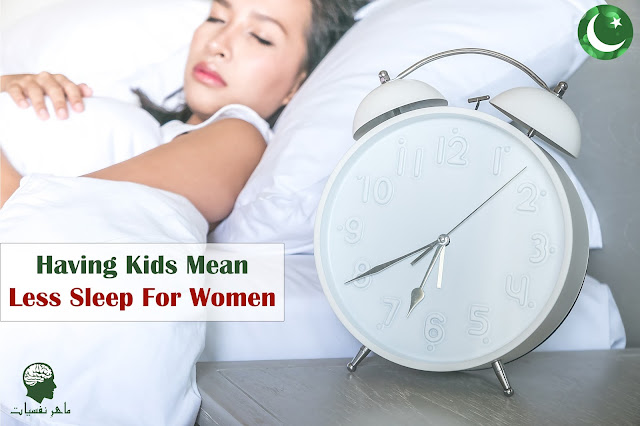
Having Kids Means Less Sleep For Women, But Not For Men

New parents often talk about the toll a newborn can take on their sleeping habits, but as it turns out, it may not be so bad—if you're a man, that is. If you're a woman, having kids can wreak havoc on your sleep schedule, according to a new study.


Researchers from the American Academy of Neurology and Georgia Southern University analyzed data from a survey that asked 5,805 Americans how much they slept each night and how often they felt tired over the past month. For every child a woman 45 and under had, she was 50 percent less likely to get six hours of sleep or more per night. Only 48 percent of moms in this age group got seven hours or more, compared to 62 percent of women without children. On average, women with kids felt tired for two weeks out of every month, compared to 11 days for those without kids. No such pattern existed for men.

These results don't really come as a surprise, since women in heterosexual relationships still do the majority of housework and are responsible for child care. But the study has huge implications, since sleep affects everything from your memory to your chances of getting sick. Plus, some research suggests women need more sleep than men.

“I think these findings may bolster those women who say they feel exhausted,” study author Kelly Sullivan, Ph.D., said in a press release (as if we needed data to prove that). “Getting enough sleep is a key component of overall health and can impact the heart, mind, and weight…. It’s important to learn what is keeping people from getting the rest they need so we can help them work toward better health.”

Courtesy: Glamour / Image Design: FreePik

Friday, March 10, 2017

This Pakistani is developing a video game to fight stigma around mental health

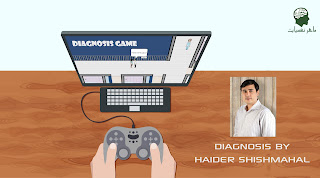
Haider Ali Shishmahal is a teacher, writer, and Fulbright scholar.  He studied human development and Psychology at Harvard and has also learned game development.  He is the owner of Cyberjack Studio.  His game, Diagnosis, combats the stigma of mental illnesses through he magic of gaming.

In an interview to IGN Pakistan, when Mr. Shishmahal was asked what motivated him to start video game development, especially in the context of his professional teaching background , he said how games are distributed to large numbers of people at the click of a button is what inspired him to create Diagnosis.

According to Mr. Shishmahal, Diagnosis was basically envisioned as a sort of game where Theme Hospital meets Stardew Valley. The protagonist is a psychiatrist who diagnoses other characters suffering from mental illnesses. The core mechanic is that the player does that by talking to the characters and referring to a disease and statistics manual (DSM). It’s a 2D game that’s being made on Unity for the PC and we intend to distribute it over Steam. We want to take what is a serious topic and inject some humor and lightheartedness into it to make it a feel-good kind of a game. We don’t want you to feel bad or sad about these characters but rather to be able to relate to them.

He further added that he wants to have a social impact and really want to combat the mindset that encourages the idea that people can’t learn from games. From time to time, we read about how games are destroying us and leading us to violence and profanity. While certain games might do that, all games don’t. Games are just a means of communication, they are an art form and it depends on the player and maker of the game. Everyone takes away something different from a game; Diagnosis is about helping people and talking to them. It’s about connecting people with people, and people with ideas.

Team Diagnosis understands that a lot of gamers have very specific preferences when it comes to what types of games to play and they are excited that they may draw in people who otherwise don’t play games.  They even want to pitch this game to hospitals and academic institutions. They are adding certain elements such as item quests or romance quests that aren’t necessary in an educational game about mental illness but will make the game all the more interesting. Instead of having to talk in third person, they are also working out how they can get a romantic scene going. They want people to get involved with the characters and if they fall in love with the character they will want to continue playing the game and find out what becomes of that character. Furthermore, it’s not an educational game where you learn English or counting; you get to learn about mental illnesses, so that uniqueness will certainly help the game.

Diagnosis is still in the development phase since the summers, so the game right now is a rough prototype. Mr. Shishmahal hopes that if Diagnosis gets funded, they could get the game made within a year and a half, however if they don’t it could take more time, maybe three years, because people must do other things to make money. Fortunately, most of his team members are willing to invest as much time as necessary, if it’s required to make the game better.  Once launched, the game will be available for users at a price of $16.99 (approx PKR 1800).

Mr. Shishmahal believes that this game has the potential to reach anywhere between 1-2 million players. The game could impact an unbelievable number of families, and change their lives. He hopes that it becomes a dinner-table conversation topic, or one that is discussed between friends while having tea or coffee. He wants to give this game to people, who are too shy or afraid to discuss a very sensitive topic such as mental health, a platform to speak about mental illnesses. So, while someone suffering from schizophrenia won’t be able to talk about it directly, they could talk about one of the characters in that game who has schizophrenia, and maybe through that conversation, they’ll get the courage to talk about their own problems.

Diagnosis is currently in development, and Mr. Shishmahal needs your help in making his dream come true. You can support his studio by visiting this link.

Interview Reference: pk.ign.com

Saturday, February 18, 2017

Pakistani Teens Use Mannequin Challenge To Shine Spotlight On Violence Against Women

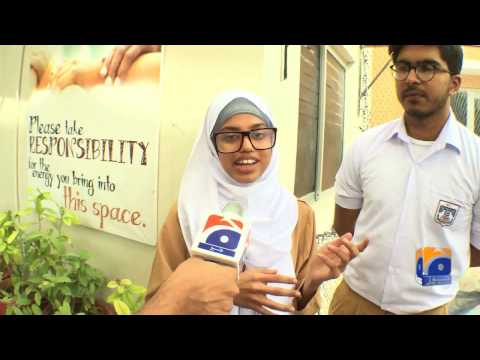
KARACHI: Trends come and go, but rarely do they have an impact on the viewer like a recent mannequin challenge that I stumbled across on my timeline. Created by AS-level students in Karachi, the video already viewed over 1.4 million times and shared over 36,000 times, raises awareness about violence against women and it drives the message home.

Before the age of the internet, trends took a while to trickle down from the West to the East – be it fashion trends, music trends or even pointless ones. Had Gangam Style been released thirty years ago, Psy may not have become the sensation he became thanks to Youtube.

Without Facebook, Twitter, Instagram and other popular social media platforms trends like the ice bucket challenge, the bottle flip, the hot pepper challenge, the mannequin challenge and the likes would never have become trends.

The ice bucket challenge that started in 2014 created awareness about amyotrophic lateral sclerosis or ALS and managed to raise funds that led to a breakthrough in ALS research, most other trends haven’t had such an impact.

Back in October 2016 when the mannequin challenge began, people from all walks of life, politicians, statesmen, pop stars, actors, sports icons and of course the millions of people who follow such trends jumped on the bandwagon.

That’s when we stumbled upon the mannequin challenge video made by teenagers from the Foundation Public School, it was simple, it was heartfelt and it struck chord with everyone who has viewed it so far.

I caught up with these students to find out a little about them, their challenge and their story.

H/T: Geo News English

Sunday, January 15, 2017

Mentally ill and the unfortunate death penalty


The case of Khizar Hayat is a glaring reminder of the alarming deficiencies in the criminal justice system of Pakistan. Why did the Central Jail Lahore request black warrants for Hayat’s execution and the District and Sessions Judge issue them when his execution was pending before the Lahore High Court are questions that need official scrutiny. This is not the first time that a clear lack of coordination between the lower tier of the criminal justice system, jail authorities and lower courts, and the superior judiciary has been witnessed. In October last year, the Supreme Court ordered the acquittal of two brothers, Ghulam Qadir and Ghulam Sarwar, only to find out that they had already been executed. And while the timely order by the Lahore High Court staying the execution of Hayat has prevented him from meeting a possibly similar fate as the two executed brothers, this whole episode casts serious doubt on whether Pakistani courts possess the organisational coherence required to effectively dispense justice.

Hayat is a mentally ill person. He suffers from psychosis and schizophrenia, with the diagnosis unanimously concluded by examination at the Punjab Institute of Mental Health. It is surely confounding that in this day and age it is being debated in Pakistan whether schizophrenia classifies as a mental illness severe enough to save its sufferer from execution. And when the Supreme Court ruled in the case of Imdad Ali, a schizophrenic man awaiting execution, that schizophrenia does not qualify as insanity in the legal sense, a great deal of opprobrium was generated over it, both domestically and internationally, which, needless to say, did not present Pakistan in good terms. Even the Supreme Court realised that there was more to schizophrenia than its earlier ruling and decided to review the case. The Lahore High Court was correct to observe that while the decision of Ali’s case is yet to be delivered by the Supreme Court, it would be appropriate to wait for the decision before proceeding on Hayat’s case. However, this opportunity should be used to open the broader debate on the supposed merits of the death penalty in Pakistan.

In the modern justice system, the death penalty finds no justification, since the object of state sanctioned punishment is reform, not revenge. In any case, even if the philosophical debate on the death penalty is set aside, the error-prone criminal justice system of Pakistan militates against enforcement of the death penalty, the irreversible nature of which does not leave for any means to undo a wrongful verdict. Furthermore, when the rich can simply buy impunity for their wrongdoings, it is only the poor that are left to face the gallows. The problem is made worse by the inherent bias within the police against those belonging to low socioeconomic classes. A state prosecution, far from competent, finds easy prey on the poor due to their lack of access to good legal counsel. And as their fate is decided by the courts, little empathy is spared for them as they are callously executed by jail authorities, evidently, without caring to check if their case is pending before a higher court. In such an unfortunate state of affairs, even the otherwise most ardent supporters of the death penalty would not be able mollify their qualms over it. And it would be a great travesty of justice to let this continue. Perhaps, the government should rethink the rationale behind the imposition of the death penalty.

Courtesy: Daily Times

Saturday, January 7, 2017

Disability Services Helpline to be introduced soon in Pakistan

Potohar Mental Health Association is leading the initiative to introduce counselling and disability services for persons with disabilities

ISLAMABAD – A dedicated disability helpline providing counseling services to persons with disabilities and their families, and connecting them with to relevant professionals, will start its operations by February 2017.

The initiative is being worked by Potohar Mental Health Association (PMHA), a non-government organization working on mental health of children, youth and adults including persons with disabilities.

“PMHA’s helpline will be the first of its kind in entire South Asia which will also provide counselling and training services” announced PMHA President Zulqurnain Asghar.

Zulqurnain outlined how people with disabilities have to face what he called “attitudinal barriers” laid down by the people around. Often, people with their acts, such as name callings, end up ostracizing the differently-abled bodies.

The point was further endorsed by Ammar Masood, CEO AAAP Communications, who asked visually impaired students to not be led by negativities; instead, he encouraged them to invest in education, which will help them get good work opportunity, resulting into an attitudinal change among the people toward the people with disabilities. He encouraged them to learning talking computers, which will help them connect with the world.

Zulqurnain touched upon physical barriers people with disabilities face, sharing how they are not catered to in major infrastructure plans all over the country.

“As of now, only two of the Metro bus stations in Islamabad-Rawalpindi have accessibility facilities for people with disabilities,” he highlted.

He called upon all governments to translate promises into action. Every year, officials make promises for providing special amenities and facilities for the people who are differently-abled but every year, these promises are not fulfilled, only to be repeated next year. Even the implementation status of various amenities or jobs offered is questionable.

On this occasion, Maliha Husain Director Mehrgarh shared that people with disabilities are more vulnerable to sexual harassment; there is thus a need to inform more and more people about informing them that sexual harassment is now a crime, which can be reported to the relevant authorities.

Farrah Naz Country Representative Country Office Pakistan CBM International graced the event as Chief Guest along with other valuable guests from different walks of life.

Courtesy: TVI

Friday, December 16, 2016

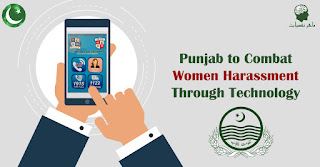
Punjab to Combat Women Harassment Through Technology


Women will soon be able to use a smartphone application to report harassment along with their exact geographic location to the police.

An android application is being developed by the Punjab Safe Cities Authority (PSCA) in collaboration with the Punjab Commission on Status of Women to help report and combat harassment faced by women across the province.

Through the application, women can notify the Police Integrated Command, Control and Communication (PPIC3) officials about the kind of harassment they are facing along with their exact geographic location. The officials will then dispatch a team of first responders to immediately tackle the situation. The first responders of this application will be the Dophin Force, Police Response Unit and Police Stations Beat Officers.

Women’s harassment includes, but is not limited to domestic, workplace or public place harassment.

The application will be used for two purposes: to create awareness about harassment and to help victims of it. It will consist of two to three modes including a panic button for emergency situations. Phone calls generated from the application will be directed to the 15 helpline where a special desk has been designated to answers the calls. These operators have undergone special training to effectively deal with cases of various forms of harassment. “Definitions of what constitutes harassment and what does not will be built-into the application so apart from helping out the citizens, we can also educate them,” says Shamsher Haider, Deputy Chief System Integration at the PSCA. The punishments for these crimes are in sync with Federal and Provincial legislature.

However, while the application aims to make it easier for women to report harassers, the officials have not mentioned how the law enforcement agencies will be sensitized to ensure that female harassment cases are dealt with delicately and adequately. “We already have laws where women can report abuse and assault, but the process of filing that FIR, or even stepping into the police station, means preparing yourself for a character assassination first,” says Sadia Khatri, Founder of the women empowerment initiative “Girls at Dhabas”. When reports of harassment / assault do come in, the very officials dealing with the reports turn to the survivor (usually a woman) first, trying to find a reason to blame her for what she had no control over. It’s rare for authorities to focus their investigation on the aggressor — esp until media and activists make some noise.”

The application, being developed by Lahore University of Management Sciences (LUMS) IT Department will be launched by the end of December, 2016.

Wednesday, December 14, 2016

Horrifying memories of APS attack impede survivors’ studies


After two years of the horrific attack on the Army Public School (APS), Peshawar, many surviving students find it hard to concentrate on their coursework as the gory incident keeps flashing back in their minds to distract them from studies.

Several survivors, who are now enrolled in different colleges after graduating from the APS, still feel traumatised. Reportedly, they were not satisfied with their academic performance as much as they used to be before the Dec 16, 2014 attack.

They said that their capacity to pick lecture in classrooms and understand a topic through book reading had lowered alarmingly after witnessing the bloodbath on that fateful day.
Attack victims need regular, prolonged counselling, says a psychiatrist

“I get frightened whenever someone speaks loudly or walks in a hurry,” says Amir Ameen, one of the survivors. Though the bullet wound on his left arm has healed, the gory incident left a deep scar on Amir’s life with problems he is still struggling to overcome.

Mr Amir said that after losing his friend-like brother Ishaq Ameen he was missing him at every moment of life as they would play together, enjoy the picnic places, and study and sleep in the same room of their house.

“When I turn off the light and go to sleep, the entire episode of APS attack recycles in my mind,” said Mr Amir, who is now a student of Mechanical Engineering in Sarhad University, Peshawar. Sometimes, he also hears those deafening blasts in dream.

He says he feel relieved from the trauma during daytime for being busy in the university and with his friends. But while sitting alone, Mr Amir says he remembers his brother and rest of the classmates who lost their lives in the militant attack.

Vowing to continue his education, he said that time of death was fixed and no one could escape that moment when it would come.

Maaz Irfan, another survivor, is still going through trauma amid continuous surgeries of his left elbow. “So far, I have gone through four major and several minor surgeries, but despite that my elbow is not folding,” said Maaz, who is now a student of Islamia College.

Another major surgery would be conducted on Dec 20 in Lahore, he said. “My mother, who is a psychiatrist, says that the horrifying memories linked with the terrorist attack on APS will fade away gradually,” he said.

“I get panicked whenever I hear gunshots. Even a cracker blast by children in marriage ceremonies frightens me,” he said, while sharing his experiences in routine life. Maaz said that he couldn’t focus fully while reading a book.

“A psychiatrist has been examining me every week, but still I avoid going to noisy places like bazaars, functions, etc,” said Malik Tahir Awan. “I have lost nine friends, all 10th graders. I cannot forget them,” he said.

Muneebullah Shah, one of the survivors, said that impact of the trauma was very high in the initial days, which had reduced to some extent.

The normal grief on the death of a near and dear one depends on the age of the deceased person, nature of death, whether natural or unnatural, sudden or after a prolonged disease and on the emotional bonds of the family members of the deceased, said Dr Mian Iftikhar Hussain, when asked about the trauma among the survivors.

Dr Hussain, a known psychiatrist and psychotherapist, said that in case of a normal death the grief prolonged from three to six months. The grief of the victims and survivors of the APS attack will prolong from a minimum of one year to many years because of the unnatural, unexpected death due to a catastrophic incident, he said.

The victims and survivors of the APS massacre need regular and prolonged counselling sessions, he said, adding the joint counselling sessions of the parents and survivors were also needed for a prolonged period where they could share their grief and lessen their miseries.

All these counselling services need to be provided by the government by involving psychiatrists and clinical psychologists. The parents and survivors of the incident need to be facilitated to come out of this grief smoothly, Dr Hussain suggested.

They need to be helped out to come to terms with the loss as soon as possible and enabled to continue their life ahead without weeping constantly on their wounds, he said. These wounds of great loss need to be healed as soon as possible though the scars will remain.

The grief of the parents and survivors need to be redirected to purposeful, welfare activities that could bring them satisfaction, he said, adding that regular recreational activities might be provided to them to facilitate this process.

He mentioned that after one year to the incident the parents and the survivors were still passing through the grief and holding portraits of the victims. “In my opinion the required counselling services have not been provided. Access by psychiatric and psychological service providers to the survivors and parents of the APS students has been restricted for unknown reasons,” he said.

Both fathers and mothers of the victims have been passing through miseries and prolonged grief, but in Dr Hussain’s opinion the grief of the mothers was more than the fathers because of the greater biological, physiological and psychological bonds.

The mothers are restricted to their homes and relatives in our culture, so they find fewer opportunities than fathers to express their emotions and vent their grief.

The parents are not satisfied with the probe into the APS attack, as details about the incident have not been shared with them. So, this illusion about the APS incident, why and how it happened will also be a significant factor in prolonging the grief of the parents and survivors, he said.

H/T: Dawn News

Monday, December 12, 2016

Mental retardation increasing in Pakistan due to cousin marriages: Pakistani researchers

A team of 12 Pakistani researchers has concluded that the reason for mental retardation in the Pakistani population is the prevalence of the cousin marriages.

The researchers were from the Shaheed Zulfikar Ali Bhutto Medical University (SZABMU), Islamabad, and they collaborated with the scientists from the Netherlands and the USA for this pathbreaking report on the impact of the cousin marriages. Last Tuesday the report was brought to light and the research already found its place in the prestigious science journal, Nature’s Molecular Psychiatry.

What the report states on the cousin marriages

This research report says that it has discovered 30 genes that were responsible for causing mental retardation and intellectual disabilities in the population.

Vice Chancellor of the Shaheed Zulfikar Ali Bhutto Medical University, Dr Javed Akram hailed the Pakistani researchers for their efforts calling it a ‘landmark discovery’ and also said that the ‘mental retardation is high due to cousin marriages.’ Dr Akram was also part of this team.

Total 121 families with Intellectual disability (ID) were selected mostly from the rural areas of  Punjab, Sindh, Baluchistan, Khyber Pakhtoon Khawa and Northern areas.


The enrolled families comprise eight ethnic groups, namely Punjabi (68.6%), Siraiki (10.8%), Pathan (9%), Urdu speaking (7.8%) and others (Sindhi, Afghan, Baloch and Kashmiri (3.8%) and each of these families had 2 or more affected individuals and 111 families consanguineous unions, while in 74 families the affected individuals were present in separate sibships

To check the full report and its findings, click here.

Cousin marriages are common in Pakistan but its impact on the population has been a subject of controversy and hardly any debate happens on this. The researchers are hoping that with this report out, the situation may improve and better medical facilities will be available for those affected by it.

Cousin marriages among Pakistanis ring alarm bells even in the UK

Baroness Flather made headlines last year when she said that the first cousin marriages among the Pakistanis were leading to disabilities among the children. She even wanted the couples to undergo DNA tests first to ensure that the issue of incest could be controlled.

She had then called the situation ‘absolutely appalling’ and she especially singled out the Pakistanis coming from its occupied Kashmir.

The British citizens of the Pakistani origin account for a mere 3.4 percent of all births in the UK, yet they account for 30 percent of the children born with recessive gene disorders.

In Bradford, the Pakistani population is mere 15% yet a whopping 55% are married to their first cousins.

H/T: Current Triggers

Thursday, December 8, 2016

Bullying in Pakistan


Being subjected to some kind of verbal or physical or even social disturbance is not something that should be accepted nor is it something normal that happen for every person during his/her lifetime, yet it is some form that might cause any person to feel threatened, powerless or not accepted among his/her community, and lead that person to drop himself out of any engagements with the social life, or even worse it might lead them to try ending their lives and committing suicidal acts. Bullying in Pakistan is present since a long time, and it is increasing quickly with the appearance of new ways to bully others like the emergence of the internet that led to the appearance of cyber bullying.

Cyber bullying in Pakistan

According to a study that was done among 25 countries about cyber bullying, it was found that Pakistan does not stand at the first of the row in online bullying, yet it also takes the twenty second highest rate in cyber bullying. But children in Pakistan do have a background about cyber bullying and know what it means and how they might be subjected to it in which 6 in every 10 children said that they know something about cyber bullying.

Cyber bullying is referred to any act that is done by one person or a group of people towards another person over some type of technological tool, either mobile phones or the usage of the internet. Cyber bullying can come in the form of sending text messages, e-mails, using the social media websites such as FaceBook to share someone’s confidential information by accessing their profiles without their knowledge (hacking) like sharing their photos or some videos they already have of them. Cyber bullying can include audio messages that is sent to the victim and might leave them nothing but frightened and threatened, and the thing that is even worse than what cyber bullying is all about is the fact that it might take place at any time during the day, the bully does not have to stick to certain hours like bullying in schools and in workplaces.

With over 100 million users of smart phones in Pakistan, Pakistan has been included in the list of the fastest growing countries that are using internet which only open the doors for the fact that cyber bullying is increasing as well, yet there isn’t any legislation for cyber crimes in Pakistan. In 2007, General Pervez Musharaf introduced the Prevention of Electronic crime Ordinance (PECO) which was in order to prevent terrorist or banned groups from using the internet for using propaganda against the military and to protect female members of the Parliament who were being harassed by abusive phone calls and text messages.

Other people in Pakistan who are far from the political life complain about living in a country that suffer from the absence of law to protect them against online crimes, saying that PECO had several flaws, and many of the definitions in it were incorrect, such as for example the ordinance that was sent for the NA for ratification stated that sending indecent, provocative and ill motivated messages through e-mails and text messages was an offence and would result in 14 years of imprisonment along with the confiscation of property which was seen by a lot of people that it was too much for a minor issue, and on the other side there were no provision in PECO that tackles the issue of child pornography and intellectual property theft.

One of the main problems that results from cyber bullying in Pakistan is that the women are more involved in bullying and harassment acts more than men, with the appearance of the internet world and the girls taking over, they started knowing everything on the online world and engaging themselves in the internet world, teenage girls in Pakistan are considered “computer savvy”. The problem is that girls are not only open to the world of information and entertainment but they also know about the online sexual content. The girls in Pakistan claim that they know the dangers that result from the internet world, where 84% of the girls cited their own common sense in detecting and differentiating between the harmful and harmless acts that happens over the internet, while 51% stated that they know the difference according to their parents, and only 4% believe that nothing is ever bad on the internet because they claim that it is not a real world.

In Pakistan it seems that women are the easiest targets to be bullied online, because the National Response Center for Cyber Crimes (NR3C) does not have any legislation for cyber crimes such as hacking and online stalking, there were several incidents that faced women regarding these issues.
  • The first one was of the two girls from a liberal arts college in Pakistan who decided to participate in an international sketching competition, the sketches were supposed to be of nude self portraits, so they asked a friend to photograph and send the pictures over to them via e-mail, but the secret was easily revealed because at the very same week the two girl’s e-mails were hacked and blackmailing threats started reaching them.
  • Another incident was of the two female celebrities in Pakistan who reported for Bytes for all the Facebook profiles that were formed about them, and the reason behind creating such profiles was to recruit some young girls as modeling aspirations for dubious events and phony jobs. Such acts do not only affect the image of these celebrities but also make those girls at the mercy of the criminals.
  • One of the main cyber bullying issues in Pakistan that threatens every girl is being sexually attacked. And according to Nabiha Meher, a Pakistani blogger who also teaches in some universities in Lahore, the family’s honor in Pakistan is usually tied to the women, if the woman in the family is sexually attacked then the whole family’s honor is attacked as well, and that’s why bullies in Pakistan play on that part by harassing women online even by sending them a threat that they will rape them.

School bullying in Pakistan

School bullying is any kind of bullying that is connected with education, meaning that it takes place within the school; it might be in the form of verbal bullying such as name calling, teasing, mocking and threatening or might be physical such as hitting, shoving, spitting, punching, stealing and damaging property, or it might take the form of social bullying such as gossiping, spreading rumors, excluding a person from a group or spreading hatred towards him in school. The children who are being bullied usually face some kinds of depression, lack of sleep, they might disengage themselves from the social life, or else they will find themselves skipping school or feeling unsafe and threatened to go.

The person who is being bullied in school is usually being picked among a large number of students because they seem different in some way whether the religion or the sex, or else it might be for another appearances such as being shy for example, some researches done even mentioned that some bullies do such acts because they are just bored and want to have fun. Studies have shown that children who are subjected to bullying acts are more likely to suffer from mental health problems such as depression, low self esteem, stress or anxiety, or else they might think about suicide.

According to a study that was done in six medical colleges in Pakistan, it was found in the 63% of the people who responded to the survey that 52% of the respondents reported that they had faced bullying or harassment during their medical education, and about 28% of them experiencing it more frequently or even every month, and 57% of the bullying acts were verbal.

Bullying at school leads to other problems that might last with the person, and because of that a lot of people consider bullying as a kind of violence, it is even estimated that 1 in every 4 children who have faced an act of bullying in elementary schools will have a criminal record at the age of 30. Bullying at schools might lead to the student losing his/her friends, or yet not having the career they always dreamed of when they finish their studies, some might even enter the career level but yet be subjected to another workplace bullying acts since they are already weak.

Some of the things that should be taken in order to avoid bullying in the schools of Pakistan:
  • Ignoring the bully and walking away, that kind of act will tell the bully that the victim actually don’t care, sometimes walking away is even more better for the person than confronting and losing his/her temper. But over time the bully will find themselves getting bored because they find no responses.
  • The bully is always targeting for angering the victim, and if the victim controlled his/her anger that might make the bullies lose their minds.
  • The victims should never engage themselves in physical relations, because the acts of bullying usually comes out from people who consider themselves more powerful, and the victim doesn’t know what he is putting himself into, such ways will only lead to more violence in the place.
  • Victims should open up themselves and talk about incidents that they faced, they should tell their teachers or parents about what they are facing in their everyday life in school. Talking can be an outlet for the fears and frustrations that are inside any person.
  • Children should know how to choose their friends and peers in school; they should know who is good and who is bad.
School bullying cases in Pakistan

After the great appearance of bullying in the schools of Pakistan, several parents reported to the police about incidents that happened with their children. For example:
  • The case of the 13 year old Pakistani junior high school student in Takamatsu whose father filed a criminal complaint with the police about the classmates of his son who are always bullying and injuring him.
  • Another parent’s of a male Pakistani student in high school in a town in Kagawa Prefecture filed a complaint for the police because his son was being bullied and injured seriously in school. His parents said that four of his classmates were always making verbal comments about the boy because his skin color was different, and using words like “dirty skin” and telling him to go back to his country. He was also being beaten up by them.
Workplace bullying in Pakistan
Any behavior that is unprofessional and unwanted that affects the dignity of an employer is usually unacceptable in the workplace and is considered an act of bullying. Workplace bullying is when a person uses his power in an unjustifiable manner over a vulnerable colleague or an employee, which has been considered a swearing word in the professional circuits. Research analysis showed that people who are subjected to acts of bullying in their workplaces usually talk with their friends and family about the incidents and some of them even look for other jobs, while 42% talk with their colleagues about their acts, and only 9% to 18% of the affected people put a formal complaint.

According to a Pakistani business review in 2011, it was found that there is a relation between popularity and bullying in workplaces, since the person who is popular is usually loved and appreciated by his employer and colleagues, the bully usually feels jealous towards that person, which leads him doing some bullying acts towards the other person. This study showed also that in Pakistan female employers are more likely to be bullied by female bosses, while male employers are more likely to be bullied by male bosses, it was also stated that male employers are being bullied for their work performances while women are bullied for personal and moral values.

Bullying in an organization can reduce staff turnover and increase de-motivation and absences among employees, which will result in negative productivity. And because popular employers are targeted more than the others it will affect their giving in the workplace as well.

References
http://www.jpma.org.pk/full_article_text.php?article_id=2155
http://www.plosone.org/article/info%3Adoi%2F10.1371%2Fjournal.pone.0003889
http://herald.dawn.com/tag/cyberbullying

H/T: No Bullying

Interested for our works and services?
Get more of our update !