About me

AAAAAAAAAAAAAAAAAAAAAAAAAAAAAAaaa

Tags

Why Should You Hire Me

Search This Blog

Featured Content Slider

Business

Recent Posts

Popular Posts

Facebook

Random Posts

Advertising

Search

AAAAAAAAAAAAAAAAAAAAAAAAAAAAAAAAA
Showing posts with label mental health. Show all posts

Tuesday, September 26, 2017

Pakistani student develops stick to cure Parkinson’s

A Pakistani student at University of West England (UWE) has come up with a latest technology to cure patients suffering from Parkinson’s disease.

A stick, that can possibly prove to be a solution to the ailment, can benefit thousands of patients around the world.

During her study at the university, Neha Chaudhary invented this stick that is able to help 12,500 Parkinson’s patients in Britain alone. The stick induces movement in frozen muscles enabling the patients to walk again. In order to keep people’s attention away from the patients and their pain, the design of the stick has been kept simple and plain.


Having witnessed the disease from close, Neha invented this stick after her own family members suffered from the ailment repeatedly. Her father, in particular, sustained serious injuries due to the seizure of his muscles and his inability to walk.


Seeking pride in her achievement, Neha in an interview said that the success of this invention is her biggest accomplishment so far. Parkinson’s disease is one of the diseases that still do not have a proper treatment as yet and the medication only delays the effects of the disease temporarily. Neha also shared that she started this intervention as her university’s final year project, back in 2014.

The stick has been tested on a lot of people in England. National Health Services (NHS) and Parkinson’s organization in England has shown a keen interest in Neha’s incredible project.


Moreover, Neha even established her own company by the name of ‘Walk to Beat.’ According to Neha, when the patients were given the sticks they were overcome with immediate joy and majority of them expressed satisfaction that the stick does actually work.

Made of plastic, the light weighted, easy-to-carry-around stick makes use of high-tech sensors installed in it. The sensors, thus, activate dead muscles and help the patients to move around again.

Images & Post via: thenews.com.pk

Sunday, March 19, 2017

Watching birds near your home is good for your mental health


Watching birds near your home is good for your mental health

People living in neighbourhoods with more birds, shrubs and trees are less likely to suffer from depression, anxiety and stress, according to research by academics at the University of Exeter, the British Trust for Ornithology and the University of Queensland.

The study, involving hundreds of people, found benefits for mental health of being able to see birds, shrubs and trees around the home, whether people lived in urban or more leafy suburban neighbourhoods.

The study, which surveyed mental health in over 270 people from different ages, incomes and ethnicities, also found that those who spent less time out of doors than usual in the previous week were more likely to report they were anxious or depressed.

After conducting extensive surveys of the number of birds in the morning and afternoon in Milton Keynes, Bedford and Luton, the study found that lower levels of depression, anxiety and stress were associated with the number of birds people could see in the afternoon. The academics studied afternoon bird numbers - which tend to be lower than birds generally seen in the morning – because they are more in keeping with the number of birds that people are likely to see in their neighbourhood on a daily basis.


In the study, common types of birds including blackbirds, robins, blue tits and crows were seen. But the study did not find a relationship between the species of birds and mental health, but rather the number of birds they could see from their windows, in the garden or in their neighbourhood.

Previous studies have found that the ability of most people to identify different species is low (eg Dallimer et al, 2012), suggesting that for most people it is interacting with birds, not just specific birds, that provides well-being.

University of Exeter research fellow Dr Daniel Cox, who led the study, said: "This study starts to unpick the role that some key components of nature play for our mental well-being".

Birds around the home, and nature in general, show great promise in preventative health care, making cities healthier, happier places to live".

The positive association between birds, shrubs and trees and better mental health applied, even after controlling for variation in neighbourhood deprivation, household income, age and a wide range of other socio-demographic factors.

Recent research by Dr Cox and Professor Kevin Gaston, who are based at the Environmental Sustainability Institute at the Penryn Campus at the University of Exeter, found that watching birds makes people feel relaxed and connected to nature (Cox and Gaston, 2016).

The research is published in the journal Bioscience and was funded by the Natural Environment Research Council as conducted as part of the Fragments, Functions, Flows and Ecosystem Services project.

Courtesy: Exeter UK 
Photograph: FreePik

Sunday, January 15, 2017

Study Says Indian-Occupied Kashmir Facing Mental Health Crisis


Health experts have highlighted the fact that Indian occupied Jammu and Kashmir is facing a mental health crisis.

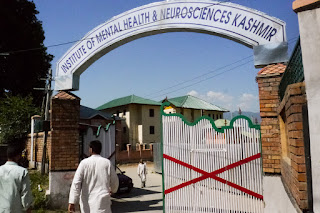
A study conducted by psychiatrists from the Institute of Mental Health and Neurosciences in Kashmir, in collaboration with ActionAid India, said that cases of depression-related illnesses in the region were almost double that of the rate inside India.

"The 11.3 per cent morbidity of severe mental illness in adults is very high, almost double (than in India), much of which is undetected and untreated," the study said.

According to Kashmir Media Service , the situation is compounded by an inaccessible mental health care system.

Experts, in the study, recommended that mental health services be expanded and integrated into the primary healthcare system in order to contain the growing number of people with mental illnesses.

 They said the treatment gap is very high in Indian occupied Kashmir, where depressive and anxiety-related disorders constitute most of the mental illnesses.

"Only 12.6 per cent of the people with mental illness sought help from health services and 6.4 per cent consulted a psychiatrist," added the study.

Courtesy: Daily Times

UK’s first Muslim astronaut aims to put focus on mental health


For most people who go into space it is a dream come true, but for the man set to be the UK’s first Muslim astronaut his priority is making the world a better place.

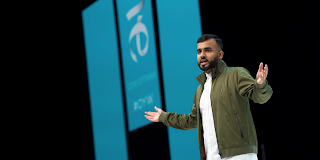
Hussain Manawer, 25, from Ilford, Essex, is due to blast off in 2018 after seeing off thousands of other entrants from more than 90 countries in a competition.

The poet, charity fundraiser and founder of his own creative agency dedicated his victory to everyone who has suffered mental health problems, and said he had an important mission in life.

“It’s never really been an ambition of mine [to go into space], but I felt I wasn’t contributing enough to the world,” he said. “I got to the point where I thought we are failing the world so much in so many different ways. When I saw the competition I thought: let me go for it, let me see what happens.

“I am using it as a platform to venture into problems, which is how I think it should be. What influenced me is you have to be somebody in order for people to take you seriously, in order to have an impact.”

Manawer’s pitch for the Kruger Cowne rising star competition was centred on mental health, from his entry video to his final speech featuring a poem about depression and self-harm, in which he lamented: “I wasn’t meant for this planet.”

He plans to release a mixtape featuring his poetry about mental health, and in March he will attempt to set a world record for the largest mental health lesson, for 1,000 students from 30 schools from all over the country, at Hackney Empire in London.

Manawer is fully behind a campaign for schoolchildren to be taught about mental health, but believes teachers are under enough pressures and so need outside assistance.

Even before winning the space travel competition, Manawer had raised thousands of pounds for charities and given lessons on cyberbullying in 400 schools. He has a successful YouTube channel, Hussain’s House, featuring interviews with the comedian Kevin Hart, rapper G-Eazy and radio presenter Charlamagne, and was a torchbearer in the buildup to the London Olympics.

He said he saw the competition to travel beyond the 100km mark in XCOR Aerospace’s Lynx spacecraft as a way of taking his campaigning to another level. The contest was run in association with One Young World, a platform for 18- to 30-year-olds, supported by the likes of Kofi Annan.

“Never did I think I’m going to win it,” Manawer said. “I just thought if I can get through a few stages I get to be associated with some good humanitarians and they will take my stuff more seriously. There was Bob Geldof and Fatima Bhutto, who has done humanitarian work in Pakistan. I want to host meetings of global influencers to effect change.”

His public profile has soared since winning the competition. He fronted a launch video for London’s night tube, has rubbed shoulders with political leaders and royals and given talks around the world, all squeezed in between his astronaut training.

Manawer has also become a public face of Muslims at a time of increasing scrutiny of the faith. In his victory speech he declared: “My name is Hussain and I am not a terrorist,” an allusion to the hit 2010 Bollywood film My Name is Khan.

“Something triggered in my head and I thought: the world’s watching a Muslim person get an award, I want to say something meaningful,” said Manawer. “It’s good for people to see the positive side of a religion that gets missed a lot.”

At the same time, he does not want his religion to obscure his overriding message. “To me it’s very clear we are failing the world’s mental health,” said Manawer. “If we can tackle that, it will solve a lot of problems.”

Courtesy: The Guardian

Saturday, December 31, 2016

Don’t forget mental health in New Year’s resolutions

Improving physical health can benefit mental well-being.

One of people’s most common New Year’s resolutions is to get healthier. Although this can often take the form of vowing to lose weight, the behaviors associated with weight loss - eating less fat, more fruits and vegetables, and increasing physical activity - help improve overall health as well.

But as much as we want to improve our physical health, one area that is often overlooked is mental health. A growing body of research suggests there is an important relationship between the body and mind - and that being physically healthy can have the added benefit of improving mental well-being.

One of the most common - but often overlooked - factors that can impact health is stress. Although not all stress is bad, the negative effects of too much stress can be substantial over time. According to the National Institute of Mental Health, continued strain on the body from routine stress may lead to both physical and mental health problems, including heart disease, high blood pressure and diabetes, but also depression and anxiety disorders.

Other studies have found people living with chronic physical conditions can experience emotional stress and chronic pain, which are both associated with developing depression and anxiety. In fact, the Canadian Mental Health Association found people living with chronic physical health conditions experience depression and anxiety at twice the rate of the general population.

But while poor physical health can have a negative impact on mental health, the good news is the opposite is also true. And if you have vowed to improve your physical fitness in the New Year, you may notice mental health benefits as well.

The U.S. Centers for Disease Control and Prevention reports that regular physical activity can reduce the risk of depression, while also helping to keep thinking, learning and judgment skills sharp as people age. Although people will gain the most benefit from exercising three to five times a week for 30 to 60 minutes, research has found there is a health benefit - physical and mental - to almost any type of physical activity. Even something as simple as walking can enhance your mood.

Doctors have known for years that physical activity stimulates the production of chemicals in the brain called endorphins, which help relieve stress and improve mood. In addition to these and other benefits of exercise (such as losing weight and reducing the risk of heart disease, diabetes and some types of cancer), physical activity can help people feel better about themselves, boosting confidence and self-esteem. 

Other behaviors known to enhance physical health can also have a positive impact on mental well-being. For example, eating nutritious food, not smoking or using drugs (including not drinking alcohol to excess) and getting enough sleep can help improve mood and mental functioning while also reducing the risk of serious chronic disease.

Of course, there are many factors that can impact mental health - including heredity, trauma, brain injury and addiction, among others - and not all are preventable. Nor does living a healthy lifestyle guarantee an individual will never have mental illness. Still, good physical health may help reduce the risk of mental illness, help alleviate symptoms and is an important part of mental health recovery. That’s why doctors treating mental illness almost always recommend exercise as part of an individual’s recovery plan.

Ultimately, your mind and body are connected on many levels - and being truly healthy includes both physical and mental health. If you are concerned you might be dealing with emotional or mental health issues, talk to your doctor or a local mental health clinic as soon as you can - because research also suggests that mental health issues can have a negative impact on physical health.

Best wishes for a happy and mentally healthy New Year!

Saturday, December 3, 2016

Knitting, baking and painting improve well-being and mental health, study finds


It’s hard to pinpoint when exactly it happened, but at some point over the past few years, wool got cool.

No longer the preserve of grannies, knitting is now a popular hobby amongst younger generations, with millennials showing off their creations on instagram, making pilgrimages to niche wool shops and hosting hat-making parties with their friends.

And it’s not just knitting that’s made a comeback of late - a whole host of traditional and crafty skills like jam-making, crocheting and painting have had a resurgence.

According to a new study, however, taking up one of these hobbies won’t just make you terribly on-trend, it’ll also improve your mental health.

The research studied 658 students and discovered that after engaging in something crafty, people felt not only happier and calmer the following day but had more energy too.

Knitting and baking have long been lauded for their therapeutic nature, but the researchers also included crocheting, jam-making, cooking, performing music, painting, drawing, sketching, digital design and creative writing in their list of beneficial activities.

The results of the study, carried out by Otago University, New Zealand, will no doubt please members of the Women’s Institute, which has always placed an emphasis on such traditional past-times.

Janice Langley, chairman of the National Federation of Women's Institutes, told the Daily Mail: "WI members have enjoyed creative activities and crafts since the very first WI meeting in 1915, so it's great to hear this study has found some evidence that these interests could lead to increased wellbeing and creativity.”

And with the past decade having seen a notable increase in WI members and the creation of new branches, it would appear more and more people are discovering the benefits of getting crafty and domestic.

Perhaps most interesting about the study’s findings is that the boost in well-being from a creative activity endures too: “Engaging in creative behaviour leads to increases in well-being the next day, and this increased well-being is likely to facilitate creative activity on the same day,” explained the study’s lead author, Dr Tamlin Connor.

So if you want to feel better tomorrow, pick up a wooden spoon or some knitting needles today.

Interested for our works and services?
Get more of our update !