


This Pakistani is developing a video game to fight stigma around mental health
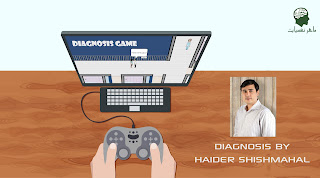
Haider Ali Shishmahal is a teacher, writer, and Fulbright scholar. He studied human development and Psychology at Harvard and has also learned game development. He is the owner of Cyberjack Studio. His game, Diagnosis, combats the stigma of mental illnesses through he magic of gaming.
In an interview to IGN Pakistan, when Mr. Shishmahal was asked what motivated him to start video game development, especially in the context of his professional teaching background , he said how games are distributed to large numbers of people at the click of a button is what inspired him to create Diagnosis.
According to Mr. Shishmahal, Diagnosis was basically envisioned as a sort of game where Theme Hospital meets Stardew Valley. The protagonist is a psychiatrist who diagnoses other characters suffering from mental illnesses. The core mechanic is that the player does that by talking to the characters and referring to a disease and statistics manual (DSM). It’s a 2D game that’s being made on Unity for the PC and we intend to distribute it over Steam. We want to take what is a serious topic and inject some humor and lightheartedness into it to make it a feel-good kind of a game. We don’t want you to feel bad or sad about these characters but rather to be able to relate to them.
He further added that he wants to have a social impact and really want to combat the mindset that encourages the idea that people can’t learn from games. From time to time, we read about how games are destroying us and leading us to violence and profanity. While certain games might do that, all games don’t. Games are just a means of communication, they are an art form and it depends on the player and maker of the game. Everyone takes away something different from a game; Diagnosis is about helping people and talking to them. It’s about connecting people with people, and people with ideas.
Team Diagnosis understands that a lot of gamers have very specific preferences when it comes to what types of games to play and they are excited that they may draw in people who otherwise don’t play games. They even want to pitch this game to hospitals and academic institutions. They are adding certain elements such as item quests or romance quests that aren’t necessary in an educational game about mental illness but will make the game all the more interesting. Instead of having to talk in third person, they are also working out how they can get a romantic scene going. They want people to get involved with the characters and if they fall in love with the character they will want to continue playing the game and find out what becomes of that character. Furthermore, it’s not an educational game where you learn English or counting; you get to learn about mental illnesses, so that uniqueness will certainly help the game.
Diagnosis is still in the development phase since the summers, so the game right now is a rough prototype. Mr. Shishmahal hopes that if Diagnosis gets funded, they could get the game made within a year and a half, however if they don’t it could take more time, maybe three years, because people must do other things to make money. Fortunately, most of his team members are willing to invest as much time as necessary, if it’s required to make the game better. Once launched, the game will be available for users at a price of $16.99 (approx PKR 1800).
Mr. Shishmahal believes that this game has the potential to reach anywhere between 1-2 million players. The game could impact an unbelievable number of families, and change their lives. He hopes that it becomes a dinner-table conversation topic, or one that is discussed between friends while having tea or coffee. He wants to give this game to people, who are too shy or afraid to discuss a very sensitive topic such as mental health, a platform to speak about mental illnesses. So, while someone suffering from schizophrenia won’t be able to talk about it directly, they could talk about one of the characters in that game who has schizophrenia, and maybe through that conversation, they’ll get the courage to talk about their own problems.
Diagnosis is currently in development, and Mr. Shishmahal needs your help in making his dream come true. You can support his studio by visiting this link.
Interview Reference: pk.ign.com
In an interview to IGN Pakistan, when Mr. Shishmahal was asked what motivated him to start video game development, especially in the context of his professional teaching background , he said how games are distributed to large numbers of people at the click of a button is what inspired him to create Diagnosis.
According to Mr. Shishmahal, Diagnosis was basically envisioned as a sort of game where Theme Hospital meets Stardew Valley. The protagonist is a psychiatrist who diagnoses other characters suffering from mental illnesses. The core mechanic is that the player does that by talking to the characters and referring to a disease and statistics manual (DSM). It’s a 2D game that’s being made on Unity for the PC and we intend to distribute it over Steam. We want to take what is a serious topic and inject some humor and lightheartedness into it to make it a feel-good kind of a game. We don’t want you to feel bad or sad about these characters but rather to be able to relate to them.

Team Diagnosis understands that a lot of gamers have very specific preferences when it comes to what types of games to play and they are excited that they may draw in people who otherwise don’t play games. They even want to pitch this game to hospitals and academic institutions. They are adding certain elements such as item quests or romance quests that aren’t necessary in an educational game about mental illness but will make the game all the more interesting. Instead of having to talk in third person, they are also working out how they can get a romantic scene going. They want people to get involved with the characters and if they fall in love with the character they will want to continue playing the game and find out what becomes of that character. Furthermore, it’s not an educational game where you learn English or counting; you get to learn about mental illnesses, so that uniqueness will certainly help the game.
Diagnosis is still in the development phase since the summers, so the game right now is a rough prototype. Mr. Shishmahal hopes that if Diagnosis gets funded, they could get the game made within a year and a half, however if they don’t it could take more time, maybe three years, because people must do other things to make money. Fortunately, most of his team members are willing to invest as much time as necessary, if it’s required to make the game better. Once launched, the game will be available for users at a price of $16.99 (approx PKR 1800).
Mr. Shishmahal believes that this game has the potential to reach anywhere between 1-2 million players. The game could impact an unbelievable number of families, and change their lives. He hopes that it becomes a dinner-table conversation topic, or one that is discussed between friends while having tea or coffee. He wants to give this game to people, who are too shy or afraid to discuss a very sensitive topic such as mental health, a platform to speak about mental illnesses. So, while someone suffering from schizophrenia won’t be able to talk about it directly, they could talk about one of the characters in that game who has schizophrenia, and maybe through that conversation, they’ll get the courage to talk about their own problems.
Diagnosis is currently in development, and Mr. Shishmahal needs your help in making his dream come true. You can support his studio by visiting this link.
Interview Reference: pk.ign.com


