About me

AAAAAAAAAAAAAAAAAAAAAAAAAAAAAAaaa

Tags

Why Should You Hire Me

Search This Blog

Featured Content Slider

Business

Recent Posts

Popular Posts

Facebook

Random Posts

Advertising

Search

AAAAAAAAAAAAAAAAAAAAAAAAAAAAAAAAA

Wednesday, January 25, 2017

Cancer Patients With Depression Have Resources

Cancer patients who experience depression can use both therapy and lifestyle tools to help support their mental health, according to a new patient resource from the JAMA Oncology journal.

People with cancer, as well as their doctors, need to remember that mental health is as important as physical health for these patients, the authors note.

“Understandably, cancer treatment is primarily focused on obtaining medical remission,” said Rachel Roos Pokorney, a therapist based in New York City who co-wrote the one-page primer intended for patients.

The page is based on recommendations given by the American Cancer Society and the National Institute of Mental Health.

“There is still an unfortunate lack of awareness about the importance of treating the mental along with the physical, both in general and in regards to cancer patients,” she told Reuters Health.

The patient resource explains that physical changes, limitations from symptoms and treatment and uncertainty about the future all put cancer patients at risk for depression.


But nontherapeutic tools, such as physical activity, a healthy diet, and a strong social network can help the body, improve mood and reduce stress, the authors write.

“There is a basic connection that the mind and body have that is very important to remember,” Pokorney said. “It is of the utmost importance to always take care of your mind by taking care of your body, and vice versa. This is especially important for cancer patients.”

Therapeutic tools, such as medication, support groups and individual therapy, can help as well. In fact, social workers, psychiatrists and psychologists are becoming more involved with cancer-based care in recent years, she said.

“As cancer treatment advances, there are more cancer survivors who are in need of long-term care, which is no longer limited to physical symptoms,” said Gleneara Bates of Columbia University Medical Center in New York City, who co-authored the patient page with Pokorney.

“The emotional burden of cancer has real-life effects on not just patients but their primary caregivers and family members,” she told Reuters Health by email. “Cancer has historically been seen as an ‘old man’s disease,’ and this is no longer the case.”

Bates and Pokorney note that using cognitive behavioural therapy and dialectical behavioural therapy to help patients identify and manage their emotions and thoughts to improve depressive symptoms is gaining support - both as a result of evidence-based studies and the rising mindfulness trend.

“Treatment for cancer-related depression is not one-size-fits-all,” Bates said. “Patients and health care providers should discuss all aspects of mental health to find the best combination.”

Cancer patients may often experience depressive symptoms after treatment has ended, said Dr Lynne Padgett, strategic director of hospital systems for the American Cancer Society in Atlanta, Georgia.

“Patients may experience symptoms when everything should be ‘OK’ because of the long-lasting effects of cancer and the treatments,” Dr Padgett, who was not involved in the patient resource, told Reuters Health. “The symptoms are often not classical and don’t meet the criteria for a depression diagnosis.”

The Commission on Cancer, an accreditation group that is part of the American College of Surgeons and issues guidelines for cancer care, expanded its emphasis on treating psychosocial distress and mental health in a 2015 guideline update. Since then, cancer centres have stepped up their assessments of mental health, she said.

Courtesy: Jama Network via Reuters

Sunday, January 15, 2017

Mentally ill and the unfortunate death penalty


The case of Khizar Hayat is a glaring reminder of the alarming deficiencies in the criminal justice system of Pakistan. Why did the Central Jail Lahore request black warrants for Hayat’s execution and the District and Sessions Judge issue them when his execution was pending before the Lahore High Court are questions that need official scrutiny. This is not the first time that a clear lack of coordination between the lower tier of the criminal justice system, jail authorities and lower courts, and the superior judiciary has been witnessed. In October last year, the Supreme Court ordered the acquittal of two brothers, Ghulam Qadir and Ghulam Sarwar, only to find out that they had already been executed. And while the timely order by the Lahore High Court staying the execution of Hayat has prevented him from meeting a possibly similar fate as the two executed brothers, this whole episode casts serious doubt on whether Pakistani courts possess the organisational coherence required to effectively dispense justice.

Hayat is a mentally ill person. He suffers from psychosis and schizophrenia, with the diagnosis unanimously concluded by examination at the Punjab Institute of Mental Health. It is surely confounding that in this day and age it is being debated in Pakistan whether schizophrenia classifies as a mental illness severe enough to save its sufferer from execution. And when the Supreme Court ruled in the case of Imdad Ali, a schizophrenic man awaiting execution, that schizophrenia does not qualify as insanity in the legal sense, a great deal of opprobrium was generated over it, both domestically and internationally, which, needless to say, did not present Pakistan in good terms. Even the Supreme Court realised that there was more to schizophrenia than its earlier ruling and decided to review the case. The Lahore High Court was correct to observe that while the decision of Ali’s case is yet to be delivered by the Supreme Court, it would be appropriate to wait for the decision before proceeding on Hayat’s case. However, this opportunity should be used to open the broader debate on the supposed merits of the death penalty in Pakistan.

In the modern justice system, the death penalty finds no justification, since the object of state sanctioned punishment is reform, not revenge. In any case, even if the philosophical debate on the death penalty is set aside, the error-prone criminal justice system of Pakistan militates against enforcement of the death penalty, the irreversible nature of which does not leave for any means to undo a wrongful verdict. Furthermore, when the rich can simply buy impunity for their wrongdoings, it is only the poor that are left to face the gallows. The problem is made worse by the inherent bias within the police against those belonging to low socioeconomic classes. A state prosecution, far from competent, finds easy prey on the poor due to their lack of access to good legal counsel. And as their fate is decided by the courts, little empathy is spared for them as they are callously executed by jail authorities, evidently, without caring to check if their case is pending before a higher court. In such an unfortunate state of affairs, even the otherwise most ardent supporters of the death penalty would not be able mollify their qualms over it. And it would be a great travesty of justice to let this continue. Perhaps, the government should rethink the rationale behind the imposition of the death penalty.

Courtesy: Daily Times

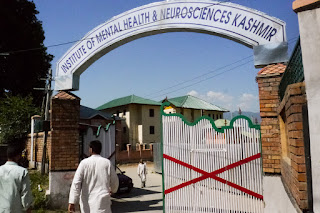
Study Says Indian-Occupied Kashmir Facing Mental Health Crisis


Health experts have highlighted the fact that Indian occupied Jammu and Kashmir is facing a mental health crisis.

A study conducted by psychiatrists from the Institute of Mental Health and Neurosciences in Kashmir, in collaboration with ActionAid India, said that cases of depression-related illnesses in the region were almost double that of the rate inside India.

"The 11.3 per cent morbidity of severe mental illness in adults is very high, almost double (than in India), much of which is undetected and untreated," the study said.

According to Kashmir Media Service , the situation is compounded by an inaccessible mental health care system.

Experts, in the study, recommended that mental health services be expanded and integrated into the primary healthcare system in order to contain the growing number of people with mental illnesses.

 They said the treatment gap is very high in Indian occupied Kashmir, where depressive and anxiety-related disorders constitute most of the mental illnesses.

"Only 12.6 per cent of the people with mental illness sought help from health services and 6.4 per cent consulted a psychiatrist," added the study.

Courtesy: Daily Times

UK’s first Muslim astronaut aims to put focus on mental health


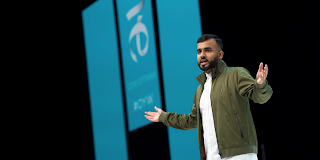
For most people who go into space it is a dream come true, but for the man set to be the UK’s first Muslim astronaut his priority is making the world a better place.

Hussain Manawer, 25, from Ilford, Essex, is due to blast off in 2018 after seeing off thousands of other entrants from more than 90 countries in a competition.

The poet, charity fundraiser and founder of his own creative agency dedicated his victory to everyone who has suffered mental health problems, and said he had an important mission in life.

“It’s never really been an ambition of mine [to go into space], but I felt I wasn’t contributing enough to the world,” he said. “I got to the point where I thought we are failing the world so much in so many different ways. When I saw the competition I thought: let me go for it, let me see what happens.

“I am using it as a platform to venture into problems, which is how I think it should be. What influenced me is you have to be somebody in order for people to take you seriously, in order to have an impact.”

Manawer’s pitch for the Kruger Cowne rising star competition was centred on mental health, from his entry video to his final speech featuring a poem about depression and self-harm, in which he lamented: “I wasn’t meant for this planet.”

He plans to release a mixtape featuring his poetry about mental health, and in March he will attempt to set a world record for the largest mental health lesson, for 1,000 students from 30 schools from all over the country, at Hackney Empire in London.

Manawer is fully behind a campaign for schoolchildren to be taught about mental health, but believes teachers are under enough pressures and so need outside assistance.

Even before winning the space travel competition, Manawer had raised thousands of pounds for charities and given lessons on cyberbullying in 400 schools. He has a successful YouTube channel, Hussain’s House, featuring interviews with the comedian Kevin Hart, rapper G-Eazy and radio presenter Charlamagne, and was a torchbearer in the buildup to the London Olympics.

He said he saw the competition to travel beyond the 100km mark in XCOR Aerospace’s Lynx spacecraft as a way of taking his campaigning to another level. The contest was run in association with One Young World, a platform for 18- to 30-year-olds, supported by the likes of Kofi Annan.

“Never did I think I’m going to win it,” Manawer said. “I just thought if I can get through a few stages I get to be associated with some good humanitarians and they will take my stuff more seriously. There was Bob Geldof and Fatima Bhutto, who has done humanitarian work in Pakistan. I want to host meetings of global influencers to effect change.”

His public profile has soared since winning the competition. He fronted a launch video for London’s night tube, has rubbed shoulders with political leaders and royals and given talks around the world, all squeezed in between his astronaut training.

Manawer has also become a public face of Muslims at a time of increasing scrutiny of the faith. In his victory speech he declared: “My name is Hussain and I am not a terrorist,” an allusion to the hit 2010 Bollywood film My Name is Khan.

“Something triggered in my head and I thought: the world’s watching a Muslim person get an award, I want to say something meaningful,” said Manawer. “It’s good for people to see the positive side of a religion that gets missed a lot.”

At the same time, he does not want his religion to obscure his overriding message. “To me it’s very clear we are failing the world’s mental health,” said Manawer. “If we can tackle that, it will solve a lot of problems.”

Courtesy: The Guardian

Saturday, January 7, 2017

Disability Services Helpline to be introduced soon in Pakistan

Potohar Mental Health Association is leading the initiative to introduce counselling and disability services for persons with disabilities

ISLAMABAD – A dedicated disability helpline providing counseling services to persons with disabilities and their families, and connecting them with to relevant professionals, will start its operations by February 2017.

The initiative is being worked by Potohar Mental Health Association (PMHA), a non-government organization working on mental health of children, youth and adults including persons with disabilities.

“PMHA’s helpline will be the first of its kind in entire South Asia which will also provide counselling and training services” announced PMHA President Zulqurnain Asghar.

Zulqurnain outlined how people with disabilities have to face what he called “attitudinal barriers” laid down by the people around. Often, people with their acts, such as name callings, end up ostracizing the differently-abled bodies.

The point was further endorsed by Ammar Masood, CEO AAAP Communications, who asked visually impaired students to not be led by negativities; instead, he encouraged them to invest in education, which will help them get good work opportunity, resulting into an attitudinal change among the people toward the people with disabilities. He encouraged them to learning talking computers, which will help them connect with the world.

Zulqurnain touched upon physical barriers people with disabilities face, sharing how they are not catered to in major infrastructure plans all over the country.

“As of now, only two of the Metro bus stations in Islamabad-Rawalpindi have accessibility facilities for people with disabilities,” he highlted.

He called upon all governments to translate promises into action. Every year, officials make promises for providing special amenities and facilities for the people who are differently-abled but every year, these promises are not fulfilled, only to be repeated next year. Even the implementation status of various amenities or jobs offered is questionable.

On this occasion, Maliha Husain Director Mehrgarh shared that people with disabilities are more vulnerable to sexual harassment; there is thus a need to inform more and more people about informing them that sexual harassment is now a crime, which can be reported to the relevant authorities.

Farrah Naz Country Representative Country Office Pakistan CBM International graced the event as Chief Guest along with other valuable guests from different walks of life.

Courtesy: TVI

Saturday, December 31, 2016

Don’t forget mental health in New Year’s resolutions

Improving physical health can benefit mental well-being.

One of people’s most common New Year’s resolutions is to get healthier. Although this can often take the form of vowing to lose weight, the behaviors associated with weight loss - eating less fat, more fruits and vegetables, and increasing physical activity - help improve overall health as well.

But as much as we want to improve our physical health, one area that is often overlooked is mental health. A growing body of research suggests there is an important relationship between the body and mind - and that being physically healthy can have the added benefit of improving mental well-being.

One of the most common - but often overlooked - factors that can impact health is stress. Although not all stress is bad, the negative effects of too much stress can be substantial over time. According to the National Institute of Mental Health, continued strain on the body from routine stress may lead to both physical and mental health problems, including heart disease, high blood pressure and diabetes, but also depression and anxiety disorders.

Other studies have found people living with chronic physical conditions can experience emotional stress and chronic pain, which are both associated with developing depression and anxiety. In fact, the Canadian Mental Health Association found people living with chronic physical health conditions experience depression and anxiety at twice the rate of the general population.

But while poor physical health can have a negative impact on mental health, the good news is the opposite is also true. And if you have vowed to improve your physical fitness in the New Year, you may notice mental health benefits as well.

The U.S. Centers for Disease Control and Prevention reports that regular physical activity can reduce the risk of depression, while also helping to keep thinking, learning and judgment skills sharp as people age. Although people will gain the most benefit from exercising three to five times a week for 30 to 60 minutes, research has found there is a health benefit - physical and mental - to almost any type of physical activity. Even something as simple as walking can enhance your mood.

Doctors have known for years that physical activity stimulates the production of chemicals in the brain called endorphins, which help relieve stress and improve mood. In addition to these and other benefits of exercise (such as losing weight and reducing the risk of heart disease, diabetes and some types of cancer), physical activity can help people feel better about themselves, boosting confidence and self-esteem. 

Other behaviors known to enhance physical health can also have a positive impact on mental well-being. For example, eating nutritious food, not smoking or using drugs (including not drinking alcohol to excess) and getting enough sleep can help improve mood and mental functioning while also reducing the risk of serious chronic disease.

Of course, there are many factors that can impact mental health - including heredity, trauma, brain injury and addiction, among others - and not all are preventable. Nor does living a healthy lifestyle guarantee an individual will never have mental illness. Still, good physical health may help reduce the risk of mental illness, help alleviate symptoms and is an important part of mental health recovery. That’s why doctors treating mental illness almost always recommend exercise as part of an individual’s recovery plan.

Ultimately, your mind and body are connected on many levels - and being truly healthy includes both physical and mental health. If you are concerned you might be dealing with emotional or mental health issues, talk to your doctor or a local mental health clinic as soon as you can - because research also suggests that mental health issues can have a negative impact on physical health.

Best wishes for a happy and mentally healthy New Year!

Friday, December 16, 2016

Punjab to Combat Women Harassment Through Technology


Women will soon be able to use a smartphone application to report harassment along with their exact geographic location to the police.

An android application is being developed by the Punjab Safe Cities Authority (PSCA) in collaboration with the Punjab Commission on Status of Women to help report and combat harassment faced by women across the province.

Through the application, women can notify the Police Integrated Command, Control and Communication (PPIC3) officials about the kind of harassment they are facing along with their exact geographic location. The officials will then dispatch a team of first responders to immediately tackle the situation. The first responders of this application will be the Dophin Force, Police Response Unit and Police Stations Beat Officers.

Women’s harassment includes, but is not limited to domestic, workplace or public place harassment.

The application will be used for two purposes: to create awareness about harassment and to help victims of it. It will consist of two to three modes including a panic button for emergency situations. Phone calls generated from the application will be directed to the 15 helpline where a special desk has been designated to answers the calls. These operators have undergone special training to effectively deal with cases of various forms of harassment. “Definitions of what constitutes harassment and what does not will be built-into the application so apart from helping out the citizens, we can also educate them,” says Shamsher Haider, Deputy Chief System Integration at the PSCA. The punishments for these crimes are in sync with Federal and Provincial legislature.

However, while the application aims to make it easier for women to report harassers, the officials have not mentioned how the law enforcement agencies will be sensitized to ensure that female harassment cases are dealt with delicately and adequately. “We already have laws where women can report abuse and assault, but the process of filing that FIR, or even stepping into the police station, means preparing yourself for a character assassination first,” says Sadia Khatri, Founder of the women empowerment initiative “Girls at Dhabas”. When reports of harassment / assault do come in, the very officials dealing with the reports turn to the survivor (usually a woman) first, trying to find a reason to blame her for what she had no control over. It’s rare for authorities to focus their investigation on the aggressor — esp until media and activists make some noise.”

The application, being developed by Lahore University of Management Sciences (LUMS) IT Department will be launched by the end of December, 2016.

Wednesday, December 14, 2016

Horrifying memories of APS attack impede survivors’ studies


After two years of the horrific attack on the Army Public School (APS), Peshawar, many surviving students find it hard to concentrate on their coursework as the gory incident keeps flashing back in their minds to distract them from studies.

Several survivors, who are now enrolled in different colleges after graduating from the APS, still feel traumatised. Reportedly, they were not satisfied with their academic performance as much as they used to be before the Dec 16, 2014 attack.

They said that their capacity to pick lecture in classrooms and understand a topic through book reading had lowered alarmingly after witnessing the bloodbath on that fateful day.
Attack victims need regular, prolonged counselling, says a psychiatrist

“I get frightened whenever someone speaks loudly or walks in a hurry,” says Amir Ameen, one of the survivors. Though the bullet wound on his left arm has healed, the gory incident left a deep scar on Amir’s life with problems he is still struggling to overcome.

Mr Amir said that after losing his friend-like brother Ishaq Ameen he was missing him at every moment of life as they would play together, enjoy the picnic places, and study and sleep in the same room of their house.

“When I turn off the light and go to sleep, the entire episode of APS attack recycles in my mind,” said Mr Amir, who is now a student of Mechanical Engineering in Sarhad University, Peshawar. Sometimes, he also hears those deafening blasts in dream.

He says he feel relieved from the trauma during daytime for being busy in the university and with his friends. But while sitting alone, Mr Amir says he remembers his brother and rest of the classmates who lost their lives in the militant attack.

Vowing to continue his education, he said that time of death was fixed and no one could escape that moment when it would come.

Maaz Irfan, another survivor, is still going through trauma amid continuous surgeries of his left elbow. “So far, I have gone through four major and several minor surgeries, but despite that my elbow is not folding,” said Maaz, who is now a student of Islamia College.

Another major surgery would be conducted on Dec 20 in Lahore, he said. “My mother, who is a psychiatrist, says that the horrifying memories linked with the terrorist attack on APS will fade away gradually,” he said.

“I get panicked whenever I hear gunshots. Even a cracker blast by children in marriage ceremonies frightens me,” he said, while sharing his experiences in routine life. Maaz said that he couldn’t focus fully while reading a book.

“A psychiatrist has been examining me every week, but still I avoid going to noisy places like bazaars, functions, etc,” said Malik Tahir Awan. “I have lost nine friends, all 10th graders. I cannot forget them,” he said.

Muneebullah Shah, one of the survivors, said that impact of the trauma was very high in the initial days, which had reduced to some extent.

The normal grief on the death of a near and dear one depends on the age of the deceased person, nature of death, whether natural or unnatural, sudden or after a prolonged disease and on the emotional bonds of the family members of the deceased, said Dr Mian Iftikhar Hussain, when asked about the trauma among the survivors.

Dr Hussain, a known psychiatrist and psychotherapist, said that in case of a normal death the grief prolonged from three to six months. The grief of the victims and survivors of the APS attack will prolong from a minimum of one year to many years because of the unnatural, unexpected death due to a catastrophic incident, he said.

The victims and survivors of the APS massacre need regular and prolonged counselling sessions, he said, adding the joint counselling sessions of the parents and survivors were also needed for a prolonged period where they could share their grief and lessen their miseries.

All these counselling services need to be provided by the government by involving psychiatrists and clinical psychologists. The parents and survivors of the incident need to be facilitated to come out of this grief smoothly, Dr Hussain suggested.

They need to be helped out to come to terms with the loss as soon as possible and enabled to continue their life ahead without weeping constantly on their wounds, he said. These wounds of great loss need to be healed as soon as possible though the scars will remain.

The grief of the parents and survivors need to be redirected to purposeful, welfare activities that could bring them satisfaction, he said, adding that regular recreational activities might be provided to them to facilitate this process.

He mentioned that after one year to the incident the parents and the survivors were still passing through the grief and holding portraits of the victims. “In my opinion the required counselling services have not been provided. Access by psychiatric and psychological service providers to the survivors and parents of the APS students has been restricted for unknown reasons,” he said.

Both fathers and mothers of the victims have been passing through miseries and prolonged grief, but in Dr Hussain’s opinion the grief of the mothers was more than the fathers because of the greater biological, physiological and psychological bonds.

The mothers are restricted to their homes and relatives in our culture, so they find fewer opportunities than fathers to express their emotions and vent their grief.

The parents are not satisfied with the probe into the APS attack, as details about the incident have not been shared with them. So, this illusion about the APS incident, why and how it happened will also be a significant factor in prolonging the grief of the parents and survivors, he said.

H/T: Dawn News

Interested for our works and services?
Get more of our update !