About me

AAAAAAAAAAAAAAAAAAAAAAAAAAAAAAaaa

Tags

Why Should You Hire Me

Search This Blog

Featured Content Slider

Business

Recent Posts

Popular Posts

Facebook

Random Posts

Advertising

Search

AAAAAAAAAAAAAAAAAAAAAAAAAAAAAAAAA

Tuesday, March 21, 2017

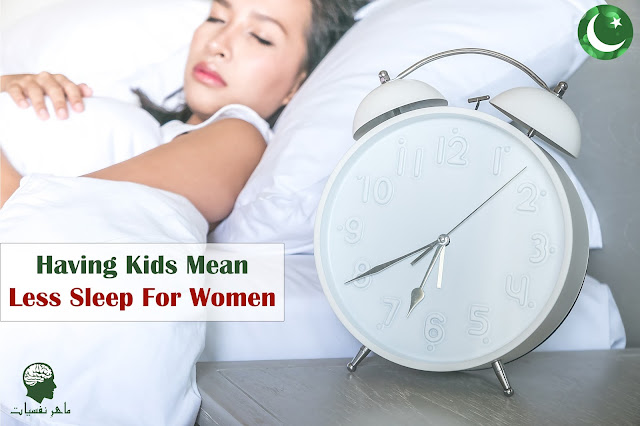
Having Kids Means Less Sleep For Women, But Not For Men

New parents often talk about the toll a newborn can take on their sleeping habits, but as it turns out, it may not be so bad—if you're a man, that is. If you're a woman, having kids can wreak havoc on your sleep schedule, according to a new study.


Researchers from the American Academy of Neurology and Georgia Southern University analyzed data from a survey that asked 5,805 Americans how much they slept each night and how often they felt tired over the past month. For every child a woman 45 and under had, she was 50 percent less likely to get six hours of sleep or more per night. Only 48 percent of moms in this age group got seven hours or more, compared to 62 percent of women without children. On average, women with kids felt tired for two weeks out of every month, compared to 11 days for those without kids. No such pattern existed for men.

These results don't really come as a surprise, since women in heterosexual relationships still do the majority of housework and are responsible for child care. But the study has huge implications, since sleep affects everything from your memory to your chances of getting sick. Plus, some research suggests women need more sleep than men.

“I think these findings may bolster those women who say they feel exhausted,” study author Kelly Sullivan, Ph.D., said in a press release (as if we needed data to prove that). “Getting enough sleep is a key component of overall health and can impact the heart, mind, and weight…. It’s important to learn what is keeping people from getting the rest they need so we can help them work toward better health.”

Courtesy: Glamour / Image Design: FreePik

Sunday, March 19, 2017

Watching birds near your home is good for your mental health


Watching birds near your home is good for your mental health

People living in neighbourhoods with more birds, shrubs and trees are less likely to suffer from depression, anxiety and stress, according to research by academics at the University of Exeter, the British Trust for Ornithology and the University of Queensland.

The study, involving hundreds of people, found benefits for mental health of being able to see birds, shrubs and trees around the home, whether people lived in urban or more leafy suburban neighbourhoods.

The study, which surveyed mental health in over 270 people from different ages, incomes and ethnicities, also found that those who spent less time out of doors than usual in the previous week were more likely to report they were anxious or depressed.

After conducting extensive surveys of the number of birds in the morning and afternoon in Milton Keynes, Bedford and Luton, the study found that lower levels of depression, anxiety and stress were associated with the number of birds people could see in the afternoon. The academics studied afternoon bird numbers - which tend to be lower than birds generally seen in the morning – because they are more in keeping with the number of birds that people are likely to see in their neighbourhood on a daily basis.


In the study, common types of birds including blackbirds, robins, blue tits and crows were seen. But the study did not find a relationship between the species of birds and mental health, but rather the number of birds they could see from their windows, in the garden or in their neighbourhood.

Previous studies have found that the ability of most people to identify different species is low (eg Dallimer et al, 2012), suggesting that for most people it is interacting with birds, not just specific birds, that provides well-being.

University of Exeter research fellow Dr Daniel Cox, who led the study, said: "This study starts to unpick the role that some key components of nature play for our mental well-being".

Birds around the home, and nature in general, show great promise in preventative health care, making cities healthier, happier places to live".

The positive association between birds, shrubs and trees and better mental health applied, even after controlling for variation in neighbourhood deprivation, household income, age and a wide range of other socio-demographic factors.

Recent research by Dr Cox and Professor Kevin Gaston, who are based at the Environmental Sustainability Institute at the Penryn Campus at the University of Exeter, found that watching birds makes people feel relaxed and connected to nature (Cox and Gaston, 2016).

The research is published in the journal Bioscience and was funded by the Natural Environment Research Council as conducted as part of the Fragments, Functions, Flows and Ecosystem Services project.

Courtesy: Exeter UK 
Photograph: FreePik

Friday, March 10, 2017

This Pakistani is developing a video game to fight stigma around mental health

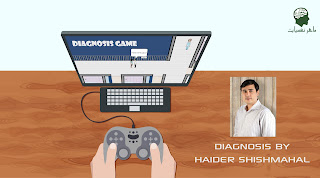
Haider Ali Shishmahal is a teacher, writer, and Fulbright scholar.  He studied human development and Psychology at Harvard and has also learned game development.  He is the owner of Cyberjack Studio.  His game, Diagnosis, combats the stigma of mental illnesses through he magic of gaming.

In an interview to IGN Pakistan, when Mr. Shishmahal was asked what motivated him to start video game development, especially in the context of his professional teaching background , he said how games are distributed to large numbers of people at the click of a button is what inspired him to create Diagnosis.

According to Mr. Shishmahal, Diagnosis was basically envisioned as a sort of game where Theme Hospital meets Stardew Valley. The protagonist is a psychiatrist who diagnoses other characters suffering from mental illnesses. The core mechanic is that the player does that by talking to the characters and referring to a disease and statistics manual (DSM). It’s a 2D game that’s being made on Unity for the PC and we intend to distribute it over Steam. We want to take what is a serious topic and inject some humor and lightheartedness into it to make it a feel-good kind of a game. We don’t want you to feel bad or sad about these characters but rather to be able to relate to them.

He further added that he wants to have a social impact and really want to combat the mindset that encourages the idea that people can’t learn from games. From time to time, we read about how games are destroying us and leading us to violence and profanity. While certain games might do that, all games don’t. Games are just a means of communication, they are an art form and it depends on the player and maker of the game. Everyone takes away something different from a game; Diagnosis is about helping people and talking to them. It’s about connecting people with people, and people with ideas.

Team Diagnosis understands that a lot of gamers have very specific preferences when it comes to what types of games to play and they are excited that they may draw in people who otherwise don’t play games.  They even want to pitch this game to hospitals and academic institutions. They are adding certain elements such as item quests or romance quests that aren’t necessary in an educational game about mental illness but will make the game all the more interesting. Instead of having to talk in third person, they are also working out how they can get a romantic scene going. They want people to get involved with the characters and if they fall in love with the character they will want to continue playing the game and find out what becomes of that character. Furthermore, it’s not an educational game where you learn English or counting; you get to learn about mental illnesses, so that uniqueness will certainly help the game.

Diagnosis is still in the development phase since the summers, so the game right now is a rough prototype. Mr. Shishmahal hopes that if Diagnosis gets funded, they could get the game made within a year and a half, however if they don’t it could take more time, maybe three years, because people must do other things to make money. Fortunately, most of his team members are willing to invest as much time as necessary, if it’s required to make the game better.  Once launched, the game will be available for users at a price of $16.99 (approx PKR 1800).

Mr. Shishmahal believes that this game has the potential to reach anywhere between 1-2 million players. The game could impact an unbelievable number of families, and change their lives. He hopes that it becomes a dinner-table conversation topic, or one that is discussed between friends while having tea or coffee. He wants to give this game to people, who are too shy or afraid to discuss a very sensitive topic such as mental health, a platform to speak about mental illnesses. So, while someone suffering from schizophrenia won’t be able to talk about it directly, they could talk about one of the characters in that game who has schizophrenia, and maybe through that conversation, they’ll get the courage to talk about their own problems.

Diagnosis is currently in development, and Mr. Shishmahal needs your help in making his dream come true. You can support his studio by visiting this link.

Interview Reference: pk.ign.com

Saturday, February 18, 2017

Pakistani Teens Use Mannequin Challenge To Shine Spotlight On Violence Against Women

KARACHI: Trends come and go, but rarely do they have an impact on the viewer like a recent mannequin challenge that I stumbled across on my timeline. Created by AS-level students in Karachi, the video already viewed over 1.4 million times and shared over 36,000 times, raises awareness about violence against women and it drives the message home.

Before the age of the internet, trends took a while to trickle down from the West to the East – be it fashion trends, music trends or even pointless ones. Had Gangam Style been released thirty years ago, Psy may not have become the sensation he became thanks to Youtube.

Without Facebook, Twitter, Instagram and other popular social media platforms trends like the ice bucket challenge, the bottle flip, the hot pepper challenge, the mannequin challenge and the likes would never have become trends.

The ice bucket challenge that started in 2014 created awareness about amyotrophic lateral sclerosis or ALS and managed to raise funds that led to a breakthrough in ALS research, most other trends haven’t had such an impact.

Back in October 2016 when the mannequin challenge began, people from all walks of life, politicians, statesmen, pop stars, actors, sports icons and of course the millions of people who follow such trends jumped on the bandwagon.

That’s when we stumbled upon the mannequin challenge video made by teenagers from the Foundation Public School, it was simple, it was heartfelt and it struck chord with everyone who has viewed it so far.

I caught up with these students to find out a little about them, their challenge and their story.

H/T: Geo News English

Wednesday, January 25, 2017

Cancer Patients With Depression Have Resources

Cancer patients who experience depression can use both therapy and lifestyle tools to help support their mental health, according to a new patient resource from the JAMA Oncology journal.

People with cancer, as well as their doctors, need to remember that mental health is as important as physical health for these patients, the authors note.

“Understandably, cancer treatment is primarily focused on obtaining medical remission,” said Rachel Roos Pokorney, a therapist based in New York City who co-wrote the one-page primer intended for patients.

The page is based on recommendations given by the American Cancer Society and the National Institute of Mental Health.

“There is still an unfortunate lack of awareness about the importance of treating the mental along with the physical, both in general and in regards to cancer patients,” she told Reuters Health.

The patient resource explains that physical changes, limitations from symptoms and treatment and uncertainty about the future all put cancer patients at risk for depression.


But nontherapeutic tools, such as physical activity, a healthy diet, and a strong social network can help the body, improve mood and reduce stress, the authors write.

“There is a basic connection that the mind and body have that is very important to remember,” Pokorney said. “It is of the utmost importance to always take care of your mind by taking care of your body, and vice versa. This is especially important for cancer patients.”

Therapeutic tools, such as medication, support groups and individual therapy, can help as well. In fact, social workers, psychiatrists and psychologists are becoming more involved with cancer-based care in recent years, she said.

“As cancer treatment advances, there are more cancer survivors who are in need of long-term care, which is no longer limited to physical symptoms,” said Gleneara Bates of Columbia University Medical Center in New York City, who co-authored the patient page with Pokorney.

“The emotional burden of cancer has real-life effects on not just patients but their primary caregivers and family members,” she told Reuters Health by email. “Cancer has historically been seen as an ‘old man’s disease,’ and this is no longer the case.”

Bates and Pokorney note that using cognitive behavioural therapy and dialectical behavioural therapy to help patients identify and manage their emotions and thoughts to improve depressive symptoms is gaining support - both as a result of evidence-based studies and the rising mindfulness trend.

“Treatment for cancer-related depression is not one-size-fits-all,” Bates said. “Patients and health care providers should discuss all aspects of mental health to find the best combination.”

Cancer patients may often experience depressive symptoms after treatment has ended, said Dr Lynne Padgett, strategic director of hospital systems for the American Cancer Society in Atlanta, Georgia.

“Patients may experience symptoms when everything should be ‘OK’ because of the long-lasting effects of cancer and the treatments,” Dr Padgett, who was not involved in the patient resource, told Reuters Health. “The symptoms are often not classical and don’t meet the criteria for a depression diagnosis.”

The Commission on Cancer, an accreditation group that is part of the American College of Surgeons and issues guidelines for cancer care, expanded its emphasis on treating psychosocial distress and mental health in a 2015 guideline update. Since then, cancer centres have stepped up their assessments of mental health, she said.

Courtesy: Jama Network via Reuters

Sunday, January 15, 2017

Mentally ill and the unfortunate death penalty


The case of Khizar Hayat is a glaring reminder of the alarming deficiencies in the criminal justice system of Pakistan. Why did the Central Jail Lahore request black warrants for Hayat’s execution and the District and Sessions Judge issue them when his execution was pending before the Lahore High Court are questions that need official scrutiny. This is not the first time that a clear lack of coordination between the lower tier of the criminal justice system, jail authorities and lower courts, and the superior judiciary has been witnessed. In October last year, the Supreme Court ordered the acquittal of two brothers, Ghulam Qadir and Ghulam Sarwar, only to find out that they had already been executed. And while the timely order by the Lahore High Court staying the execution of Hayat has prevented him from meeting a possibly similar fate as the two executed brothers, this whole episode casts serious doubt on whether Pakistani courts possess the organisational coherence required to effectively dispense justice.

Hayat is a mentally ill person. He suffers from psychosis and schizophrenia, with the diagnosis unanimously concluded by examination at the Punjab Institute of Mental Health. It is surely confounding that in this day and age it is being debated in Pakistan whether schizophrenia classifies as a mental illness severe enough to save its sufferer from execution. And when the Supreme Court ruled in the case of Imdad Ali, a schizophrenic man awaiting execution, that schizophrenia does not qualify as insanity in the legal sense, a great deal of opprobrium was generated over it, both domestically and internationally, which, needless to say, did not present Pakistan in good terms. Even the Supreme Court realised that there was more to schizophrenia than its earlier ruling and decided to review the case. The Lahore High Court was correct to observe that while the decision of Ali’s case is yet to be delivered by the Supreme Court, it would be appropriate to wait for the decision before proceeding on Hayat’s case. However, this opportunity should be used to open the broader debate on the supposed merits of the death penalty in Pakistan.

In the modern justice system, the death penalty finds no justification, since the object of state sanctioned punishment is reform, not revenge. In any case, even if the philosophical debate on the death penalty is set aside, the error-prone criminal justice system of Pakistan militates against enforcement of the death penalty, the irreversible nature of which does not leave for any means to undo a wrongful verdict. Furthermore, when the rich can simply buy impunity for their wrongdoings, it is only the poor that are left to face the gallows. The problem is made worse by the inherent bias within the police against those belonging to low socioeconomic classes. A state prosecution, far from competent, finds easy prey on the poor due to their lack of access to good legal counsel. And as their fate is decided by the courts, little empathy is spared for them as they are callously executed by jail authorities, evidently, without caring to check if their case is pending before a higher court. In such an unfortunate state of affairs, even the otherwise most ardent supporters of the death penalty would not be able mollify their qualms over it. And it would be a great travesty of justice to let this continue. Perhaps, the government should rethink the rationale behind the imposition of the death penalty.

Courtesy: Daily Times

Study Says Indian-Occupied Kashmir Facing Mental Health Crisis


Health experts have highlighted the fact that Indian occupied Jammu and Kashmir is facing a mental health crisis.

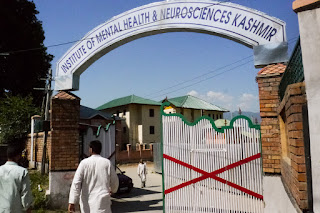
A study conducted by psychiatrists from the Institute of Mental Health and Neurosciences in Kashmir, in collaboration with ActionAid India, said that cases of depression-related illnesses in the region were almost double that of the rate inside India.

"The 11.3 per cent morbidity of severe mental illness in adults is very high, almost double (than in India), much of which is undetected and untreated," the study said.

According to Kashmir Media Service , the situation is compounded by an inaccessible mental health care system.

Experts, in the study, recommended that mental health services be expanded and integrated into the primary healthcare system in order to contain the growing number of people with mental illnesses.

 They said the treatment gap is very high in Indian occupied Kashmir, where depressive and anxiety-related disorders constitute most of the mental illnesses.

"Only 12.6 per cent of the people with mental illness sought help from health services and 6.4 per cent consulted a psychiatrist," added the study.

Courtesy: Daily Times

UK’s first Muslim astronaut aims to put focus on mental health


For most people who go into space it is a dream come true, but for the man set to be the UK’s first Muslim astronaut his priority is making the world a better place.

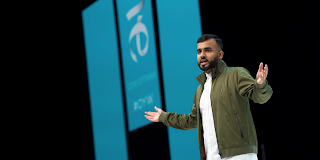
Hussain Manawer, 25, from Ilford, Essex, is due to blast off in 2018 after seeing off thousands of other entrants from more than 90 countries in a competition.

The poet, charity fundraiser and founder of his own creative agency dedicated his victory to everyone who has suffered mental health problems, and said he had an important mission in life.

“It’s never really been an ambition of mine [to go into space], but I felt I wasn’t contributing enough to the world,” he said. “I got to the point where I thought we are failing the world so much in so many different ways. When I saw the competition I thought: let me go for it, let me see what happens.

“I am using it as a platform to venture into problems, which is how I think it should be. What influenced me is you have to be somebody in order for people to take you seriously, in order to have an impact.”

Manawer’s pitch for the Kruger Cowne rising star competition was centred on mental health, from his entry video to his final speech featuring a poem about depression and self-harm, in which he lamented: “I wasn’t meant for this planet.”

He plans to release a mixtape featuring his poetry about mental health, and in March he will attempt to set a world record for the largest mental health lesson, for 1,000 students from 30 schools from all over the country, at Hackney Empire in London.

Manawer is fully behind a campaign for schoolchildren to be taught about mental health, but believes teachers are under enough pressures and so need outside assistance.

Even before winning the space travel competition, Manawer had raised thousands of pounds for charities and given lessons on cyberbullying in 400 schools. He has a successful YouTube channel, Hussain’s House, featuring interviews with the comedian Kevin Hart, rapper G-Eazy and radio presenter Charlamagne, and was a torchbearer in the buildup to the London Olympics.

He said he saw the competition to travel beyond the 100km mark in XCOR Aerospace’s Lynx spacecraft as a way of taking his campaigning to another level. The contest was run in association with One Young World, a platform for 18- to 30-year-olds, supported by the likes of Kofi Annan.

“Never did I think I’m going to win it,” Manawer said. “I just thought if I can get through a few stages I get to be associated with some good humanitarians and they will take my stuff more seriously. There was Bob Geldof and Fatima Bhutto, who has done humanitarian work in Pakistan. I want to host meetings of global influencers to effect change.”

His public profile has soared since winning the competition. He fronted a launch video for London’s night tube, has rubbed shoulders with political leaders and royals and given talks around the world, all squeezed in between his astronaut training.

Manawer has also become a public face of Muslims at a time of increasing scrutiny of the faith. In his victory speech he declared: “My name is Hussain and I am not a terrorist,” an allusion to the hit 2010 Bollywood film My Name is Khan.

“Something triggered in my head and I thought: the world’s watching a Muslim person get an award, I want to say something meaningful,” said Manawer. “It’s good for people to see the positive side of a religion that gets missed a lot.”

At the same time, he does not want his religion to obscure his overriding message. “To me it’s very clear we are failing the world’s mental health,” said Manawer. “If we can tackle that, it will solve a lot of problems.”

Courtesy: The Guardian

Interested for our works and services?
Get more of our update !